All posts by wellingtonINSIDER

Ear, Nose And Throat Expert

Ear, Nose And Throat
Expert Dr. Deborah Loney Brings A Lifetime Of Experience To Her Local ENT Practice

By Mike May

For Dr. Deborah Loney, there’s no normal day in the office. Based on the campus of Palms West Hospital, Loney practices otolaryngology, which is more commonly known as an ear, nose and throat (ENT) doctor.

“For me, no two days are the same,” said Loney, who lives in Wellington with her husband, Gerry Brown, a retired U.S. Air Force colonel, who now teaches geometry at John I. Leonard High School in Greenacres. “I have office hours where I see patients on Mondays, Tuesdays and Thursdays. I conduct surgeries on Wednesdays and Fridays at Palms West Hospital, Wellington Regional Medical Center and the Palms West Surgicenter.”

For Loney, the diversity of her ENT practice and client base can only be matched by the diversity of her background and her many life experiences that have shaped her approach to practicing medicine.

Loney was born and raised in New York, the middle child of five children. Her parents — both of whom have graduate degrees — are from Trinidad. For college, Loney enrolled at Columbia University to pursue a degree in chemical engineering before realizing that was not the best choice for her.

“Growing up, I liked math and the sciences, especially physics, but in college, I quickly realized that the life of an engineer was not for me,” Loney said.

So, she left Columbia, switched majors to chemistry/pre-med, and enrolled at Queens College in New York City. For medical school, she moved west to Palo Alto, California, where she attended Stanford University’s School of Medicine. There, she spent five years studying and doing medical research, and along the way realized that she wanted to be an ENT.

“I loved the anatomy of the ears, nose and throat,” Loney said. “The head and neck are the Park Avenue of the body. This is where you have the critical functions of life, which are to taste, smell, talk and see.”

After graduating from Stanford, Loney headed to the University of Iowa in Iowa City for her residency, which gave her the chance to work under the legendary head-and-neck specialist Dr. Brian McCabe.

“It was a fantastic learning opportunity. My boyfriend [now spouse] supported my decision 100 percent, although it meant we would be apart,” Loney recalled. “He told me to go where I would learn the most, so I did.”

While Loney chose Iowa, the U.S. Air Force assigned Brown to South Korea.

“In our first year of marriage, my husband was in South Korea, and I was in Iowa,” Loney said. “I went to see him twice, and he came to see me twice in that first year.”

After a five-year residency in Iowa, Loney excelled at her boards. With her husband in the midst of a successful military career, Loney practiced wherever her husband was stationed. Initially, that meant working in Virginia, just outside Washington, D.C., as he was stationed at the Pentagon.

While in Virginia, Loney spent six months working as an ENT and gained great experience as a locum tenens physician, which meant she traveled around the country as a fill-in for ENT doctors in their practices while they were away for an extended period of time. “That was an invaluable experience,” she said.

Later, Loney and her husband moved to other places around the nation, such as Nevada, California and Iowa. During these years of moving around the country, they had two sons, now in their 20s. This military lifestyle also included an assignment in England. Another interesting twist in Loney’s career was her decision to stop working full time and dedicate six years to homeschooling her sons.

Despite the day-to-day absence from the profession during those years, she was able to transition back into the ENT field.

“We had two and half years in Bury St. Edmonds in England, where Gerry was stationed at the Mildenhall Air Force Base,” Loney said. “I volunteered as an ENT, as needed on the base. That kept my skills sharp.”

That experience of living overseas enabled Loney and her family to travel throughout Europe frequently. She loves travel and plans to keep traveling for the rest of her life.

Four years after returning to the U.S. from England, her husband retired from the military. They moved to Palm Beach County to be near her aging parents.

When she currently works as an ENT, Loney utilizes the skills of a detective, as well as a doctor.

“If a patient is having trouble breathing, it could be due to a vocal cord mass or paralysis, nasal obstruction, lung problem, neck mass, sinusitis or even heart failure,” Loney said. “With each patient, I have to look closely, listen carefully, complete a head and neck exam, and then integrate it all to arrive at a diagnosis and treatment plan.”

There are occasions where she diagnoses an ailment with a patient serendipitously.

“A husband came along with his wife for her routine ear appointments,” Loney recalled. “I noticed that he was persistently hoarse. I examined his vocal cords, and I found a mass that turned out to be cancerous.”

Being overweight is an issue that often impacts health.

“Obesity is a big issue, especially as it often correlates with obstructive sleep apnea,” Loney said. “Roughly 70 percent of sleep apnea patients are obese — and 40 percent of obese people suffer from sleep apnea. Sleep apnea can cause headaches, irritability, hypertension, daytime fatigue, predisposition to diabetes and cardiovascular disease, diminished libido and decreased attentiveness.”

Loney spends a great deal of time encouraging her patients to lead healthier lifestyles.

“Watch what you eat, moderation is key. No. 1 is don’t smoke,” Loney said. “I also tell people, especially younger people, to not listen to loud music.”

When Loney is not working as an ENT, she loves exercising.

“I like running, bicycling, kayaking, tennis and snorkeling,” she said. “I stay healthy with exercise.”

Loney complements her exercise with a largely healthy diet, which she encourages her patients to adopt.

As for her long-term future, retirement is not a goal. Instead, she’d like to mix business with pleasure as she ages.

“My goal is to travel and to work as an ENT in underserved areas, where I can help others,” Loney said. “In the end, I want to leave the world in better shape.”

When she reflects upon her life, filled with marriage, children and travel, she wants other women to realize that they can enjoy the same lifestyle, even while working in the medical field.

“A career in medicine doesn’t mean you can’t have a life,” Loney said. “We need more women in the medical fields, surgical subspecialties in particular. They shouldn’t assume you have to forego marriage and family life in order to pursue your passion.”

Dr. Deborah Loney practices as part of the ENT and Allergy Associates of Florida. Her office is on the campus of Palms West Hospital at 12959 Palms West Drive, Suite 220. For more information, or to schedule an appointment, call (561) 793-5077.

Facebookpinterestmail

Scenic Equestrian Facility Near Showgrounds

Scenic Equestrian Facility Near Showgrounds Pristine 10 Acres On Stables Way Is Located Close To The New Back Gate Of The Wellington International Showgrounds

Photos Courtesy Martha Jolicoeur/Douglas Elliman

One of the most scenic and sought-after equestrian training facilities in Wellington is on the market. This pristine, 10-acre farm features a 16-s.tall barn, a top-of-the-line Bermuda grass Grand Prix field, a four-horse walker, a round pen and five large paddocks. A sophisticated, four-bedroom, five-bath, custom-built staff home overlooks a scenic pond. A three-bedroom, 2.5-bath pool home with a garage complete the excellent amenities. There is plenty of room to build a covered arena. The property is ideally located close to the Wellington International dressage and show jumping facilities.

Stables Way Property Presented by Martha W. Jolicoeur

Meet Martha W. Jolicoeur
Buying or selling a property with Martha Wachtel Jolicoeur assures the highest level of professional real estate consultation in the Wellington community. Jolicoeur understands the importance of customer excellence and prides herself on honesty and fairness while creating relationships with her customers that continue far beyond a transaction.

Jolicoeur first established herself in Wellington as a world-class show jumping competitor. Since then, she has combined her passion for horses with her career as one of the area’s top-ranked real estate agents catering to equestrian clientele. Committed to supporting her community, Jolicoeur presented the Leading Lady Rider Award at the Winter Equestrian Festival for 12 years.

A member of the elite Douglas Elliman Real Estate Sports and Entertainment Division, Jolicoeur serves her clients by guiding them to make the right real estate choices. Whether you are searching for the ideal family home or the equestrian estate of your dreams, Martha Jolicoeur makes it happen.

Learn more about Martha Jolicoeur at www.marthasproperties.com


Martha W. Jolicoeur
Broker, Associate
martha@marthasproperties.com
O: (561) 653-6195
C: (561) 797-8040

13501 South Shore Blvd., Suite 102,
Wellington, FL 33414


Facebookpinterestmail

Investing In Your  Health

Investing In Your  Health Wellington Has Programs To Support The Physical And Mental Health Of Residents And Staff

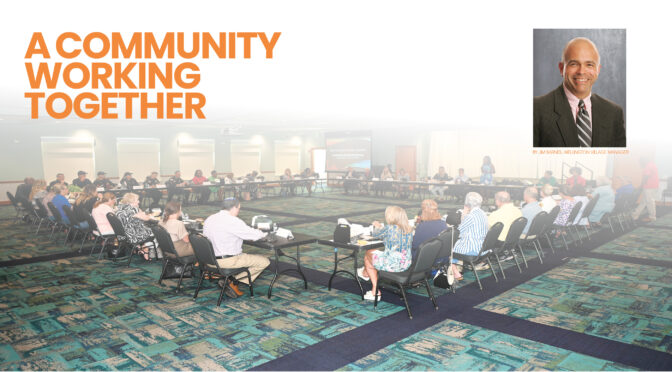
By Jim Barnes, Wellington Village Manager

One of Wellington’s hallmarks is our exceptional quality of life. We are a safe, resilient and inclusive community with an outstanding environment for all to thrive — physically, mentally, socially and emotionally. Health and wellness are essential aspects of our community’s overall vibrancy and are among our top priorities.

Promoting Health & Well-Being
Our residents share these values. In a survey conducted as part of our parks and recreation planning process, respondents said that promoting health and well-being should be a high priority for the village. Your Wellington Village Council is committed to continuing to invest in these areas to ensure that everyone who lives and works in Wellington has the opportunity to thrive, now and in the future.

Bell Seal For Workplace Mental Health
As evidence of our commitment to health and wellness, the Village of Wellington was recently awarded a platinum-level certification by Mental Health America. The Bell Seal for Workplace Mental Health is a national certification program that recognizes employers committed to creating mentally healthy workplaces. This was the second time that the village achieved the platinum level, which is the highest honor.

Workplace Health Achievement
Additionally, Wellington has been recognized by the American Heart Association with a bronze level Workplace Health Achievement. This award recognizes employers who demonstrate a commitment to employee wellness through comprehensive worksite health promotion and programs by utilizing a workforce well-being scorecard designed to help employers evaluate the culture of health and well-being within their workforces. The program also identifies gaps and determines how our progress stacks up to peer organizations. In addition to providing wellness programs for our workplace, we also offer a vast array of fitness activities through our Parks & Recreation Department.

Bike-Friendly Community
As another indicator of our commitment, we have initiated the installation of high-visibility green pavement in bicycle lanes to increase visibility of bicycle lanes, identify areas of potential conflict and promote a clearer understanding of the lanes’ purpose. This improvement recognizes our commitment to improving bicycling conditions through investments in infrastructure and pro-bike policies. Wellington has partnered with schools and various civic groups to ensure that we have a safe, bike-friendly community that offers accessibility and recreation for all. With those partnerships and more than 45 miles of bike lanes, 208 miles of sidewalks and 40 miles of multipurpose pathways, Wellington makes it clear that connectivity is a community priority.

Healthcare Providers
Healthcare is also an important amenity for residents and a vital component of our business community, with Wellington Regional Medical Center continuing to provide expert care in our community, the Joe DiMaggio Children’s Health Specialty Center offering comprehensive and convenient children’s medical services, Baptist Health South Florida offering specialized services in multiple locations and Cleveland Clinic offering services in several medical specialties locally. These four healthcare providers join dozens of other healthcare-related businesses making Wellington an elite hub for the medical sector.

Mental Health Support
We also know that mental health is an important facet of our community’s overall wellness, and we work with experts to engage community members so we can connect people with the right resources. Through partnerships with local hospitals, schools and our growing medical community, Wellington provides a multitude of options to support the mental and behavioral well-being of all. We are proud to work with local partners to end the stigma around mental health, and we continue to provide outlets for those in need.

Parks & Recreation Master Plan
While Wellington has much to be proud of in terms of health and wellness, we are always looking to innovate and improve. Among our many efforts to keep moving forward, we recently updated our Parks & Recreation Master Plan. This included analyzing our existing park system and providing recommendations for new amenities. It builds off the existing facilities plans developed since Wellington’s incorporation and will set the framework for planning, maintenance, development and rehabilitation of our parks, open spaces, recreation facilities and programming for a 10-year horizon. We will continue to partner with our local medical community as well, in order to assess and address our community health needs.
As 2023 hits its stride, I hope you are, too. Whether you’re walking, jogging or biking on our extensive shared use paths, enjoying a swim at the Wellington Aquatics Complex, or finding respite in our 12 community parks and memorials, 24 neighborhood parks, or three preserves and sanctuaries, please know that your village is invested in your well-being and dedicated to making Wellington an even happier, healthier place to call home.

Facebookpinterestmail

Keep South Florida Pests Under Control

Keep South Florida Pests Under Control Locally Based Armand Platinum Pest Control Services Brings Decades Of Experience To Residents And Businesses

Story by Mike May  |  Photos by Abner Pedraza

Veteran pest control specialists Scott Armand and Jim Bartley at Armand Platinum Pest Control Services have the experience, expertise and know how to protect your home and business. They have many years of experience providing pest control services across all necessary locations, including your lawn, flower beds, garage and more.

In early January, Armand and his wife Mair, along with Bartley and his wife Shilla, merged their two pest control firms to create a new company, Armand Platinum Pest Control Services, which is based in the western communities.

With a new company name and logo, Armand and Bartley may have a new corporate image, but their professional skills remain tried, tested and, most importantly, trusted.

“We are owner-operated, we have every license possible in the pest control industry, and our staff has more than 100 years of combined experience in this business,” said Armand, who has been working in the pest control industry in Palm Beach County since 1983.

Armand Platinum Pest Control Services serves clients here in the western communities and beyond.

“The new company will cover all of South Florida, providing all facets of pest, lawn and termite control to both residential and commercial properties with the same reliable, guaranteed and professional services that South Florida has come to expect from Scott and I,” said Bartley, whose professional career as a pest control specialist started in Palm Beach County in 1985.

Armand and Bartley have seen it all when it comes to South Florida pests.

“In Florida, it’s always a season for some type of pest,” Bartley said. “There are so many things in the pest control business that you have to know so much about. Frankly, I’m a bug nerd, and bugs fascinate me.”

If you have an issue with palmetto bugs, cockroaches, spiders, silver fish, termites, ants, rats, mice, fleas, bees, ticks, and even wildlife such as raccoons, squirrels and porcupines, Armand Platinum Pest Control Services will come to your rescue.

“We are a boutique pest control firm that provides specific services that best meet the needs of our clients,” Armand said. “Our pest control products are applied pinpoint and not broadcast.”

They aim to solve the problem without harming your landscape.

“We do pay special attention to lawns, ornamental plants and trees,” Bartley said.

While any business can proclaim to have the finest products and services, Armand and Bartley are both proud of their customer service record, which has generated many strong testimonials.

“Scott brings professionalism to this industry and customer service at the highest level,” Lisa Marder said.

“Armand Platinum Pest Control Services is second-to-none,” added attorney Mickey Smith of Lesser, Lesser, Landy and Smith. “The entire team is knowledgeable, professional and extremely responsive. I am very particular when it comes to my home, and that is why I would trust no one else to protect it. Armand Platinum also services our law firm’s offices. We could not be happier with the service we receive.”

“I’m confident those who hire Scott and his team will conclude that the quality of work he provides is absolutely second to no other,” Dennis Ewing said.

In addition to running the business, Armand and Bartley also find time to mix and mingle with other local business leaders. Armand is the president-elect of the Wellington Rotary Club and is a member of the Central Palm Beach County Chamber of Commerce, while Bartley is the current president of the Certified Pest Control Operators of Florida. Meanwhile, Armand’s wife Mair leads the Women of the Western Communities, while Bartley’s wife Shilla will also represent the company from time to time.

Right now, the client base for Armand Platinum Pest Control Services is in the vicinity of 200 customers. While the majority of its clients are based in the western communities, they are regularly sending crews as far north as Stuart in Martin County and to parts of northern Broward County to deliver pest control services.

While Armand Platinum Pest Control Services is staffed by a veteran crew of experienced pest control specialists, the company is technologically trendy and is in touch with its clients and prospective clients through multiple social media channels.

“We have a presence on LinkedIn, Facebook, Instagram and Twitter,” Armand said. “Our web site, found at www.armandpest.com, is also worth reviewing.”

The team at Armand Platinum Pest Control Services is excited to further serve South Florida residents and businesses delivering quality, personalized pest control services.

To learn more, contact Scott Armand at scott@armandpest.com or (561) 789-8777, or Jim Bartley at jim@armandpest.com or (561) 440-4567. Learn more at www.armandpest.com.

Facebookpinterestmail

World’s Finest Dressage On Display

World’s Finest Dressage On Display 2023 Adequan Global Dressage Festival Showcases 10 Weeks Of Exciting Competition

The 12th annual Adequan Global Dressage Festival (AGDF) started off its 12-week competition circuit in Wellington on Jan. 11 and runs until March 31. With two weeks off during the first four weeks, the show runs consecutively for the last eight weeks.

During these weeks, some of the top Fédération Equestre Internationale (FEI) dressage riders from around the world will ride in the AGDF International Ring to compete and qualify for numerous championships, including the World Cup, Festival of Champions and the North American Youth Championships. Spectators are welcome to watch their favorite riders compete from Thursday through Sunday each CDI week.

AGDF Director of Sport Thomas Baur invites everyone out to the dressage festival showgrounds at Equestrian Village to enjoy all the beautiful horses and great performances.

The high point of each week is the Friday Night Stars event featuring Grand Prix freestyles from some of the top riders around the world.

“Our highlight of the week is always the Friday Night Stars with the musical freestyles,” Baur said. “That is always something very entertaining, and we have a lot of spectators there. That, for me, is the most recommended part of the Adequan Global Dressage Festival.”

In addition to the freestyles on Friday evenings, the two most prestigious events are the Nations Cup taking place during Week 7 and the CDI5* during Week 10 hosted at Wellington International. Some of the countries that will be represented during the circuit aside from the United States will be Germany, France, Canada, Portugal, Spain, Japan, Denmark, Australia, Sweden, Mexico, Thailand, Venezuela, Singapore, Turkey, Belgium, Chile and Switzerland.

Baur is very excited to see the flags of so many different countries on display at the AGDF, representing the many foreign dressage riders who have made the trip to spend the winter here in Wellington.

“At the Nation’s Cup week, we have seven countries being represented, and that is really something very special to have that many teams from different countries all across the world — from Europe, South America and North America,” Baur said.

The $15,000 Lövsta Future Challenge/Young Horse Grand Prix series for horses eight to 10 years of age and the $10,000 Future Challenge/Young Horse Prix St. Georges series for horses ages seven to nine years old will be held over the season as well. Riders have five weeks of qualifying chances at the AGDF during weeks 3, 5, 7, 8, and 10. The top two horses from each week will be qualified for the final to be held during AGDF Week 11. This event gives riders and trainers the chance to showcase their talented young horses in the International Ring in an exciting and electric environment without the pressure of international competition.

The most popular night of the season will be during Week 10 when dressage takes over Wellington International. The iconic International Ring will host the CDI5*, preparing the riders for a summer spent in Europe in intensely competitive environments.

“In Week 10, which is the dressage five-star week, we will have the Friday Night Stars across the street at the big jumping stadium,” Baur said. “It’s mainly for the top horses to see something else, not always at the same showgrounds, and it will also allow us to accommodate more spectators for the five-star night.”

This season is extra special because spectators are once again able to see Olympic riders such as Adrienne Lyle. Lyle is highly decorated and won the Olympic team bronze medal with her teammates Sabine Schut-Kery and Steffen Peters. She will compete with Betsy Juliano’s stallion Salvino and show in many Friday Night Stars events to prepare for the FEI World Cup Finals in Omaha.

Two weeks of the season, Week 3 and Week 9, will also feature para-dressage. Para-dressage is the only equestrian sport in the Paralympics, and riders compete in one of five different grades based on the rider’s ability and what movements are allowed in each test. Grade I is a walk-only test, while Grades II and III are walk and trot. Grades IV and V are walk, trot and canter. The riders will compete in these three-day events with a freestyle on the final day. The para-dressage events will include one of the most decorated para riders, Roxanne Trunnell, who won an individual gold medal in the Paralympic Games in Tokyo.

For more information about the Adequan Global Dressage Festival, visit www.globaldressagefestival.com.

Facebookpinterestmail

Faces of Dressage 2023

Faces of Dressage 2023

The majestic sport of dressage has returned to Wellington, home of the Adequan Global Dressage Festival, for another amazing season. Often compared to horse ballet, or dancing with horses, dressage showcases the grace, beauty and elegance of a horse and rider pair working together as one. From elite international dressage to more introductory levels to the uplifting sport of para-dressage, all levels of the sport are on display here in Wellington this winter. While the riders and their mounts make it look effortless in the ring, dressage performances are often the end result of years of hard work. If you are not familiar with this graceful sport, be sure to check it out. For those new to dressage, one way to learn more is to visit one of the Friday Night Stars events to enjoy the lyrical musical freestyle classes. Once again, we celebrate this amazing determination and hard work in Faces of Dressage 2023, highlighting just a few of the incredible riders you can see in action this winter at the AGDF.

MORGAN BARBANÇON
Morgan Barbançon is not only fluent in French, English, Spanish, Catalan, Dutch and German, but she’s an Olympic dressage rider. In 2012, at the summer Olympics in London, she placed seventh as a team and 23rd in the individual competition. In 2015, at the FEI World Cup Finals in Las Vegas, Barbançon finished eighth. In January, Barbançon and Habana Libre won the Global Dressage Festival CDI4* Grand Prix in Wellington. Up until 2018, Barbançon competed internationally for Spain. She now competes for France.

ANNA BUFFINI
Anna Buffini represents the United States in dressage, and talent runs in her family. Her mother, Beverly Robinson, played volleyball at the collegiate level. She was selected as an alternate for the U.S. team that played at the 1988 Olympic Games in Seoul. Buffini earned several top dressage results early in the 2021 season with her Hanoverian mare FRH Davinia La Douce, placing third in the FEI Grand Prix and FEI Grand Prix Special CDI3* at the Adequan Global Dressage Festival.

PATRICIA FERRANDO
Patricia Ferrando is a Venezuelan dressage rider. She competed at the 2019 Pan-American Games in Lima, where she finished 12th in the finals, and at the 2015 Pan-American Games in Toronto. One of the most successful dressage riders from Venezuela, Ferrando trains with Yvonne Losos de Muñiz. She aims to represent Venezuela at the Olympic Games.

BEATRICE DE LAVALETTE
Beatrice de Lavalette represents the United States in para-dressage and was a member of the U.S. Para-Dressage Team for the Tokyo Paralympic Games with her horse Clarc. De Lavalette lost both of her lower legs in the 2016 terrorist bombing at the Brussels airport. She started riding again five months after the attack. She has an impressive résumé and has had tremendous success. Beatrice and Sixth Sense have won several CPEDI3* events in Wellington already this year.

REBECCA HART
Rebecca Hart is a para-equestrian originally from Pittsburgh. Hart was born with a rare genetic disorder, Familial Spastic Paraplegia. Her life with horses has been extraordinary, as she is a three-time Paralympian: in 2008, 2012 and 2016. She went to the Rio 2016 Paralympic Games and placed 9th individually. Beyond the Paralympics, Hart has racked up a long list of accomplishments in the sport of para-dressage. She will be back in the show ring at the para-dressage events in Wellington this season.

CHRISTOPH KOSCHEL
German dressage rider Christoph Koschel approaches his sport with the following philosophy: “Recognize the feel and diversity of each and every horse. See the positives and be able to adjust.” He competed at the 2010 World Equestrian Games and the 2011 European Dressage Championships, where he won a medal in the team competition. Last year, he rode American-owned Dunensee to win the CDI4* Grand Prix in Wellington. He is back in Wellington this year and will be an exciting competitor to watch.

ROXANNE TRUNNELL
Roxanne Trunnell represents the United States in para-dressage. She contracted a virus in 2009 that caused swelling in her brain, putting her in a coma and resulted in her requiring a wheelchair. Since then, she has accomplished a great deal in her riding career. She won three medals at the Paralympic Games in Tokyo, including a gold medal in the Individual Championship Test Grade I and Individual Freestyle Test Grade I events, and a bronze medal in the team open event.

ADRIENNE LYLE
Adrienne Lyle has a lengthy list of accomplishments as a top dressage rider and coach. She represented Team USA at the Olympic Games in London and Tokyo and brought home a team silver medal with her longtime partner Salvino. Lyle is currently ranked 11th in the world. Most recently, Lyle and Salvino won the FEI World Cup Grand Prix at the Adequan Global Dressage Festival in January.

TINNE VILHELMSON-SILFVÉN
The ever-impressive Tinne Vilhelmson-Silvén represents Sweden and has competed at seven Olympic Games. She placed fourth in team dressage in 1992 and in team dressage in Beijing in 2008. She also placed eighth at the 2016 Olympics. A regular at the AGDF, Vilhelmson-Silvén won the Global Dressage Festival Friday Night Stars aboard Devanto last year. It’s safe to say the crowd will be excited to see what she brings to the arenas this year in Wellington.


Facebookpinterestmail

Creating The Perfect Freestyle

Creating The Perfect Freestyle Go Behind The Scenes With Choreographer Terry Gallo And Dressage Rider Sarah Lockman Tubman

By Charity Lucente

The word “dressage” originates from the French word “dresseur,” which means to train. Dating back to 350 A.D., dressage finds its roots firmly planted in military soil. Creating a well-trained horse that was agile, quick and clever with footfalls provided the upper hand on the battlefield, when quite literal death hung in the balance. Today, dressage is an art form pursued fiercely for more sport-centric reasons, lending itself to the professional competitor and adult amateur alike.

One of the most thrilling parts of modern-day dressage is the musical freestyle program that draws an enthusiastic following. Dressage freestyles, comparable to freestyles in figure skating, join required movements into a test choreographed to music specifically chosen by the rider to have a specific emotion they wish to present to their judges and the public.

A former gymnastics coach specializing in musical editing makes Terry Gallo of Klassic Kur a bit of an unlikely suspect to be the frontrunner in choreographing dressage freestyle programs for the biggest names in the sport. With more than three decades of experience in the field, her portfolio includes Debbie McDonald, Adrienne Lyle, Steffen Peters, Laura Graves and more.

Gallo’s process of engineering a freestyle makes sure that it checks off all three of the key ingredients — tempo, suitability and rider preference.

“Creating a spectacular and custom program requires a great deal of input from the rider,” she said. “Ideally, I am onsite for the initial consultation, so I can watch the horse and rider move and interact, find out musical preferences and pinpoint the desired feeling that the rider wants to elicit from those watching. This initial process takes about two and a half hours, but that is just the tip of the iceberg!”

Gallo brings a library of music along to the consult to match the tempo of the music to the horse’s natural gait. “I don’t sit there in an ivory choreography tower and tell the rider what to do,” she said. “I listen to the rider closely and design the program to specifically fit the horse and rider pair. I want it to look as if the horse is dancing right along with the music and moving to the beat.”

The next step in completing the program is ensuring its suitability. “You want to match the expression of the horse with the musical selections,” Gallo explained. “If the horse is a big, bold mover, you need a big, bold piece to complement it.”

Lastly, and most importantly, the rider must like the musical selections.

“Some horse and rider pairs are more musical than others,” Gallo said. “They have to feel moved by the music as a team, so the judges believe the story they are telling. By editing the music around the choreography, you can shape the way the program is visually and audibly interpreted.”

The longest part of the process is choosing and then finding the music in Gallo’s extensive library.

“After those parts are completed, I send them a file with my voice over so they can see what I had in mind for interpretation of the piece,” she said. “The riders need to study it at length before they even try to ride it. In some cases, there may be minor adjustments to the program, but all totaled, I am usually in about 20 to 25 hours of work per piece. For a Grand Prix freestyle, the fee is approximately $5,000, and the pricing goes down as the levels go down. I have to pull and edit fewer pieces of music, as there are fewer of movements to choreograph.”

When it’s showtime, Gallo is often there to watch.

“I don’t get nervous watching the pieces I have created being ridden down centerline, as there is nothing I can do at that point, but I do recall holding my breath for entirely too long watching Debbie McDonald and Brentina in Las Vegas and Steffen Peters in Aachen.”

Talented Grand Prix competitor Sarah Lockman Tubman has worked with Gallo on creating a freestyle program.

“We work with Terry to help us come up with the choreography. My husband, Lee Tubman, is also a 4* FEI judge, so he has judged many Friday night freestyles. He knows what movements look good strung together and score well,” Tubman said. “We have to submit a ‘floor plan’ before we compete that tells the judges the order in which the movements are going to be performed. We get extra points for stringing harder movements together.”

A score for a freestyle’s “degree of difficulty” plays a large part in the final score, so that’s why it’s important to push the choreography to the limit, Tubman said.

One of the hardest parts of creating a freestyle program is picking the music.

“We may have our own ideas of what we might like for music, but sometimes the music we like won’t actually go with the horse,” Tubman said. “Terry Gallo, who has created countless Olympic freestyles, uses a metronome to pick the horse’s tempo, and then we pick a few songs that work. After that, we will ride the horse to the music. It’s funny, because honestly, sometimes the horse picks the music. You will turn on the song, and the horse seems to just start dancing!”

Each level of freestyle has a list of required movements to be performed. “Almost everything is from the International Grand Prix test, from simple things like 20 meters of collected walk and 20 meters of extended walk, to piaffe for 10 steps in a straight line,” Tubman said. “Working from the list of required movements, that’s where we decide how many movements we can string together in a way to increase the degree of difficulty but highlight our horse’s strengths.”

She likes to highlight her mount First Apple’s strengths during the performance. “Apple’s highlights are the passage and also his incredible flying changes that we show on a circle and on bending line,” Tubman said. “His ability to be elastic is unbelievable, so we show an extended canter into a double pirouette into one tempi changes on a bending line.”

As a professional trainer, she uses the musical freestyle for another reason that is far less obvious to spectators.

“We have used the freestyle and the ability to choreograph our own test to help build confidence in this young Grand Prix horse,” Tubman said. “We always notice that after a freestyle competition, he is more confident in the work not only at home, but also in the regular Grand Prix tests. He is a showman and loves the atmosphere and the lights and the crowd!”

While it is important to make it challenging, it’s equally important to get the ride right.

“We have to plan as difficult a freestyle as is possible that we know we can ride mistake-free,” Tubman said. “If it’s too difficult, and you make a lot of mistakes, then you will end up with a lower mark, and the horse will lack confidence. It’s better to ride it clean and on time with the music.”

Learn more about Terry Gallo at www.klassickur.com and Sarah Lockman Tubman at www.sldressage.com.

Facebookpinterestmail

Pirouette, Piaffe & Penalties

Pirouette, Piaffe & Penalties Seeing Dressage Through The Eyes Of Rider, Coach And Trainer Debbie McDonald

By Charity Lucente

Hailing from Hailey, Idaho, Debbie McDonald is a household name in the world of dressage. During her illustrious career as a professional horseman, McDonald was awarded the bronze medal for team dressage at the 2004 Athens Olympic Games; she represented the United States, winning two gold medals at the 1999 Pan American Games; and has recently accepted the position to once again be the dressage technical advisor for the United States Equestrian Federation.

Starting her riding career as a top hunter jumper, McDonald made the switch to dressage in 1990 following several injuries and the birth of her son. “When you’re young and get injured, you just bounce back. When you’re a mom, you think to yourself, ‘I need to be around!’” she said.

The transition between the two disciplines proved to be most challenging for McDonald in ways one might not have thought.

“I couldn’t sit the trot, because riding jumpers, we never sat the trot, I posted everywhere,” she laughed, remembering her early days of dressage training. “They put me on this large, massive mound of leather, and I’m like, ‘I can’t sit on this, there is just no way.’ I was sent to Hilda Gurney, and I stayed on a lunge line for a very long time. I went from being at the very top of my sport to the bottom of the barrel in dressage. I sat there on that lunge line and figured out that dang sitting trot until I could stay quieter in the saddle. I was granted the opportunity to ride my first Grand Prix schoolmaster named Cashmere. It was then that I was sold that this is what I really wanted to do. He was older, but he knew all the buttons, and he gave me the feeling and the timing.”

Her own experiences in the saddle have made McDonald an excellent coach and teacher.

“Sometimes you watch riders from the very beginning, and you know they just have that natural and innate talent to be world class riders,” McDonald explained.

“You also have the riders who can become world class,” she continued. “I would say I was a become, because I was not a natural. When I started in jumping, I fell off every single day, over every single jump. I just couldn’t learn how to stay on the horse. I was bound and determined that I was just going to do it. When I think back to that, because I struggled and I didn’t have that natural ability, I think I can maybe pass some of that on to somebody who doesn’t quite have that natural talent. I can help them think through that experience. But, no, I was not a natural in any way shape or form.”

This lifetime of experiences has led her to her current career as a coach and technical advisor. “Getting to where the Grand Prix can be ridden in a way that looks easy, is my goal for every rider I get to work with,” McDonald said.

She loves to see a horse and rider pair that has really taken their time to develop true partnership and harmony. Classical training and harmony are a huge part of the sport, and McDonald finds working with horses just as fascinating as working with riders.

“I honestly love helping a horse figure out how to use its body in the pirouettes, passage and piaffe,” McDonald said. “What fascinates me is the timing of it and finding a way of communicating in a way that the horse isn’t stressed. You have to read the horse. Some horses are just so naturally gifted at it that it’s basically teaching them how to get in and out of the movement. Then there are other horses that people will say, ‘I don’t know. I’m not sure if they will get this.’ Taking the time to help that horse understand with the help of a good ground person, I find that process to be one of the most exciting and rewarding.”

The level of training with the horse and rider often corresponds directly to the dressage scores.

“For me, what really separates so many in the show ring is that piaffe and passage tour, because you can see the level of training there. You even see it in the walk,” McDonald said. “You can have a horse currently sitting at a 75, come down into the walk and now be in the 60s. You can have a horse that does all the other stuff and doesn’t have a quality walk that’s iffy laterally, or there just isn’t enough overstep in the extended, and it is just enough of a penalty to keep you out of the top rankings. Pirouettes are fascinating to me also. To keep a horse in an honest, true, collected canter, be able to turn around and still have that moment of suspension without becoming a spin, a canter pirouette done well is pure magic to me.”

McDonald sees herself as a true advocate for the horse.

“The biggest danger we have in the progression of this classical sport are riders in the wrong hands working on a timeline — riders who aren’t being smart and paying attention to what the horse is trying to say,” she said. “I would rather see a horse be a fantastic small tour horse rather than be broken trying to make it a Grand Prix horse, when you know in your mind that it probably won’t be a top horse. This hurts me because we need all of these horses, not just the top of the top. Make the horse the best it can be, but don’t push it past that.”

It is this attitude toward the sport of dressage that will ensure its longevity and beauty, as well as the animals that help make it happen.

Facebookpinterestmail

Know The Dressage Movements

Know The Dressage Movements FEI 5* Judge Janet Foy On What Is Required In The Dressage Ring

By Charity Lucente

Janet Foy is a name often mentioned in competitive dressage circles. As a dressage judge, she brings high expectations of attention to detail and accurate riding.

A United States Dressage Federation bronze, silver and gold medalist herself, Foy, a native of Colorado Springs, now lives in Wellington. She has created a legacy rich in the acumen and accomplishments necessary to hold the elite position of FEI 5* and USEF dressage judge.

Being a member of the United States selector panel for the 2004 Athens Olympics, the 2006 and 2010 World Equestrian Games, the 2007 Pan Am games and the 2008 Beijing Olympics certainly more than qualifies her to be the authority in assessing the benchmark of quality within the sport of dressage.

As a dressage rider looking to progress through the levels, or the eager spectator in the grandstands, it can be a touch allusive to know exactly what the judges are looking for and what is required to get an excellent mark.

When asked what makes for a successful or unsuccessful horse and rider pair in the FEI and lower-level tests alike, Foy emphasized that in both, “inaccurate figures, not using corners and lack of preparation” are among the most common and most costly of mistakes that she sees made by the dressage riders in the ring.

Regardless of the movement itself, whether it be passage and pirouettes in the Grand Prix, or a stretchy trot circle at E in a training level test, the preparation for each individual foot fall is integral to the success, fluidity and, ultimately, the score of each unique requirement asked of the pair.

Foy stressed that no movements stand out from any other in degrees of importance.

“All movements are important to the level,” she said. “Perhaps the riders have a favorite, but it is not my job to have one.”

This beautifully stated perspective of objectivity provides some clarity to those piloting their horses down centerline — every step is of equal responsibility and deserving of the utmost attention.

With as much depth and scope of the sport from inside the judges’ box, inquiring minds want to know if there have been any distinct moments, tests or experiences that stood out as personal highlights for Foy.

“The ride in Herning [Denmark] from the freestyle of [world champion horse] Glamourdale gave me goosebumps, as did the Tokyo [Olympics] ride of Dalera BB,” she said.

To hear genuine excitement from someone who has been wrapped up in horses as long as Foy is a refreshing beacon to all who have a deep and soulful love of horses, proving that the magic of it is never lost if you just look for it.

Casting her focus toward future goals and her personal vision for the next generation of up-and-coming riders, Foy had advice on how to bring them along in the correct way. “Find a trainer who has good basics and experience at the level you are working,” she said. “Not everyone needs a Grand Prix rider at first level. Develop a good seat. If your trainer won’t do lunge lessons, find a new one.”

In other words, don’t be in a rush to move more quickly than your confirmed skill set, and surround yourself with people who will help you create a solid and correct foundation for the future demands of your riding career. The beauty of the sport is truly born in the basics.

Facebookpinterestmail

The Mane Event

The Mane Event Keeping Horses Looking Good Goes So Much Deeper Than The Braids

By Charity Lucente

In the world of competitive horse showing, braiding and grooming are a usual part of the artistic showmanship of the event, particularly in the sport of dressage. From a functional standpoint, braiding a horse’s mane and tail has been done for hundreds of years to prevent the hair from getting tangled in the riding equipment the horse wears. Keeping the mane and tail braided as a matter of daily maintenance can keep the individual hairs from becoming damaged and broken.

In today’s modern show scene, braiding or plaiting a horse’s mane enriches the horse’s appearance by showing off the muscling and silhouette of the horse’s neck for judging purposes. When showing, competitors take great care to present a tidy picture out of respect for the horse, the sport and the judges.

In order to get a glimpse of what goes into managing and maintaining a horse at the very top of the sport, we spoke with Carly Muma, head groom and stable manager for dressage rider Susie Dutta.

Growing up in rural Michigan as a young rider, Muma participated in 4H and hunters with a premarin mare that her mother had given her. She developed a superior work ethic to complement her empathic nature and innate attention to detail, which has taken her to the top of the sport of dressage.

As an up-and-coming professional in the industry, Muma pursued the world of eventing and found herself as a groom and rider for Buck Davidson Eventing and BDJ Equestrian in Pennsylvania. In her role there, she learned just how demanding the professional horse world can be, how extremely difficult it is to find balance in your work and personal lives as a whole, and how always having an open mind allows you to learn new ways of doing things.

“We have to keep in mind that we don’t know everything and need to give priority to the controllable aspects of horse care,” Muma said.

During her time training, grooming and traveling for team BDJ, Muma forged a relationship with Tim and Susie Dutta of the Dutta Corporation, for whom she is now the head groom and stable manager of their international string of dressage horses. She finds herself truly bonded with each of the five equine athletes under her direct care and takes the time necessary to know their every behavioral pattern, bump, bruise, noise, gait and request.

Being this precise and particular about her horses’ care allows her to not miss the smallest of details and prevents issues before they start.

When asked what essential tools she could not live without in her daily grooming kit, the answer was one of a wise professional who knew that the tools of her sport only supplement the greatest asset of all — good and safe horsemanship.

“A basic, good-quality brush and curry go a long way and are accessible to everyone,” Muma said. “Good horsemanship and a quality feed and farrier are the simplest of ways to keep your horse safely at their best, starting from the inside out, from the core.”

Muma always keeps her focus on the horses in her care.

“Good, basic horsemanship was instilled in me from the beginning, and sometimes I feel like that lacks. It is so easy just to rush through your day, and then you lose the details,” she said. “It doesn’t matter if you’re doing hunter plaits, dressage button braids or banding for a western pleasure class, it is all in the details and being consistent to your program.”

As stable manager for Susie Dutta, Muma has soaked up any and all knowledge and experience to grow her abilities in horse husbandry using a wide array of modalities. In her daily set of therapies, she uses shock wave, Sport Innovations blankets and laser therapies to bolster her horses’ wellness regimen.

She offers wise advice to anyone involved in this all-encompassing love of horses.

“No matter what sport you compete in, even if you are purely a recreational weekend warrior, we all do it for the love of the horse,” Muma said. “We are their voice. It’s just making sure they are healthy and happy. Keep it simple and pay close attention to the basics of your horses’ care and maintenance. I know that if they are healthy and happy, they will do whatever it is we ask. They will put their heart and soul into it.”

Facebookpinterestmail