As Distance Learning Becomes The New Normal, Families Explore Their Options

As Distance Learning Becomes The New Normal, Families Explore Their Options
The current academic climate is causing many parents to reconsider where and how their children will be educated during the upcoming school year.

To say that the conclusion of the last school year was a bit different is an understatement. While the vast majority of parents and educational leaders prefer students learn in a traditional classroom setting, the rising COVID-19 statistics in South Florida means it will take more time for the “old normal” to return. In the meantime, parents whose children attend public schools are looking at a “new normal.”

Most of these parents will likely accept what is being offered by their home schools, at least in the short term, but some have been exploring their options. Among those options are private schools, private tutors and other options, like Florida Virtual School.

Many private schools in the area, as well as Catholic schools led by the Diocese of Palm Beach, are beginning the school year this month with students on campus, wearing masks and practicing social distancing.

While today’s public school teachers are more than qualified to instruct students sitting in their classrooms, are they ready, prepared and willing to start this new school year like they finished the previous one — working from a remote location, providing online teaching?

Most parents appreciated the work put in by teachers at the end of the last school year, but many also questioned if the educational experience provided was as effective as it needs to be. For his part, Palm Beach County School Superintendent Dr. Donald Fennoy has promised a more robust online learning experience this fall.

For those public school parents who are not comfortable with the new normal, there’s an alternative, which is a tried, tested, respected, established and proven online option — Florida Virtual School (FLVS), a 180-day calendar of online public schooling, which provides flexibility of learning for students in all grades.

It’s worth noting that when registering with FLVS full time, it becomes the student’s primary school of record. Individual FLVS classes, however, can be taken through the child’s home school. There is also a similar online portal provided by the School District of Palm Beach County, known as Palm Beach Virtual School.

FLVS has been around for more than 20 years, starting in 1997. The price is right, too. Since it is a public school open to all Florida residents, there is no charge to enroll in FLVS.

“We are considered part of Florida’s public school system,” said Tania Clow, communications manager for FLVS.

At Florida Virtual School (www.flvs.net), students are getting the full academic experience. In the virtual classroom, nearly 200 courses are taught, ranging from algebra and biology to AP history and Spanish. Florida Virtual School teaches a wide range of students — from kindergarten to high school. It has long been popular with students who do not thrive in traditional public school settings.

There’s more to FLVS than what is taught online. Outside the virtual classroom, students also have access to more than 55 online student clubs and activities.

Additionally, one of its benefits is that students can choose to learn on their own schedules. That flexibility is important in a household where multiple family members may be on-the-go, such as high-level athletes and others who spend much of the year elsewhere.

With Florida Virtual School, the system still provides one-on-one personal instruction from certified teachers. Another plus is that students can work ahead, stay on target with their peers in the traditional school system or get back on track through the FLVS Flex program, if they fall behind in their studies for one reason or another.

Clearly, the public schools, private schools and virtual schools are competing for the same students, especially now, since so many students are being taught online this fall, and possibly into 2021.

The competition for students in Florida is significant. According to the FLVS web site, 215,505 students were taught by Florida Virtual School in the 2018-19 school year. Not surprisingly, the registration numbers have risen in recent months.

“Comparing year over year, Florida Virtual School has seen a 71 percent increase in FLVS Flex applications since July 1, and a 66 percent increase in applications for FLVS Full Time since registration opened in March,” Clow said. “There has also been an increase in inquiries from parents with younger children, researching online options for children in grades kindergarten to grade five. We encourage all parents to visit www.flvs.net for more information on our comprehensive curriculum and supportive teachers.”

While enrollment for FLVS Full Time for the upcoming school year closed July 31, enrollment for FLVS Flex is open all year round.

With FLVS Flex, students in kindergarten through 12th grade can take one course or multiple courses to supplement their education.

One of the strongest qualities of an FLVS teacher is the specialized training to communicate and interact with students, despite being in distant locations.

“Communication is very important and is a focus of the extensive training all FLVS teachers receive. We believe that supportive and effective communication should be evident throughout a student’s experience, especially in a virtual environment,” explained Jason Schultz, senior director of instruction for Florida Virtual School. “It is important that we know each child and their unique learning styles in order to support them in a meaningful way.”

While some students can thrive moving through the course more independently, others need a more individualized approach, working one-on-one with their teacher, he added.

“Some students may learn best in a group live lesson, while others benefit from a more personalized approach,” Schultz said. “Having a positive working relationship with our students and families, knowing what works for them individually, and personalizing their educational experience with us is so important in creating a successful online learning environment.”

The FLVS system has been designed to enable students to easily ask their teachers follow-up questions.

“FLVS offers live lessons within the courses, teaching the material in real time using a video conference platform. Students can engage and ask questions during the live lessons,” Schultz said. “Students can also reach out to teachers at any point when they are in need of assistance, additional resources, or need to talk with their teacher. FLVS teachers return all student e-mails, phone calls and text messages within 24 hours.”

As of mid-July, the School District of Palm Beach County was still finalizing its plans for the new academic year.

According to Fennoy, a panel of health experts has suggested that Palm Beach County public schools remain closed to on-campus learning until the rate of new COVID-19 cases shows a significant decline. Fennoy supports the school year beginning with distance learning for all students, allowing for a phased return to brick-and-mortar, in-person instruction when county health conditions permit.

To support its decision, the school district will be distributing more than 82,000 laptop computers to students who need one and is also working to make WiFi more readily available to students living in homes without Internet access. Once finalized, the school district’s plan will need to be approved by the Florida Department of Education, which has a policy preference that public school districts open the brick-and-mortar schools for students five days a week.

Fennoy’s plan sends students back to the classroom based on the state’s re-opening phases. Phase 1 is all online, since Palm Beach County, like Broward and Miami-Dade, remains in a Phase 1 re-opening. Students will begin returning to campus, divided up by grade level, once Palm Beach County moves into Phase 2.

In nearby counties, there’s a mix of on-campus learning and virtual instruction. For example, in Martin County, students return to school on Aug. 10 in person, wearing masks. However, families are also being given an online option.

Visit www.palmbeachschools.org to learn more about the school district’s plans. Learn more about Florida Virtual School at www.flvs.net

Facebookpinterestmail

Two Students From Wellington Selected For Prestigious Bank Of America Program

Two Students From Wellington Selected For Prestigious Bank Of America Program
Two high school students from Wellington, Katherine Oung and Ashley Kulberg, have been selected as part of this year’s Bank of America Student Leaders program.

The six-week paid summer internship program will help strengthen the students’ leadership abilities, civic engagement and workforce skills-building. In light of the health concerns that remain in local communities, the program, which gathers more than 300 high school students across the country, has been adapted to a virtual format, through which students will have the opportunity to participate in sessions that will expose them to the vital role that nonprofits play in advancing community health, the importance of public-private partnerships to advance social change and a focus on building financial acumen.

The Student Leaders will participate in programming that leverages Bank of America’s national partnerships and expertise and will work closely with the bank’s Palm Beach County leadership and nonprofit partners. They will participate in a collaborative, mentoring-focused project working closely with Communities in Schools of Palm Beach County to develop and deliver a social media strategy to support the organization’s efforts.

“Now, more than ever, as we collectively navigate the challenges we face in our communities, we remain committed to supporting youth and young adults of all backgrounds by connecting them to jobs, skills-building and leadership development,” said Fabiola Brumley, Bank of America’s Palm Beach County market president and vice chairman, business banking. “Creating opportunities for our youth to gain skills and build a network is a powerful investment in the future of our community.”

Through her experiences as an intern for Congresswoman Lois Frankel, the captain of her speech and debate team and the first non-collegiate lead writer for a volunteer-run newsroom, Katherine Oung has seen and heard firsthand about wealth inequality in her own community. Now, she’s working in real time to address these issues and level the playing field for her neighbors.

Oung believes in the power of volunteering to build connections that will serve as a tool to ignite meaningful change, especially within her local community. Because of her dedication and exceptional leadership qualities, the rising senior at the A.W. Dreyfoos School of the Arts has been selected for the Student Leader program.

She has spent hundreds of hours educating her peers and managing the 50-member staff at Balance the Ballot, a student-run organization with the goal of raising awareness for current global issues and getting youth more involved in and informed about politics. As a lead writer, she spearheaded an initiative to facilitate voter registration in 2018. Her South Florida region registered 200 people, and the event was so successful that it will continue leading up to this year’s election.

Oung recently penned an op-ed for The New York Times entitled “Coronavirus Racism Infected My High School,” which discussed her personal experiences with racism as an Asian American amid the rise of COVID-19.

As a counselor at Arts Reaching Out to Society Camp for the past three years, Oung helped to organize Jefferson Jubilee, a holiday event donating gifts to underprivileged children. She also served as a mentor for Beyond Resolved, a student-led speech and debate organization, where she supports, advocates and raises awareness for marginalized high school students.

Through her internship with Frankel, Oung immersed herself in the needs of her community by participating in events, meeting with area residents and leaders, and listening to their stories to better promote their needs.  She has also dedicated more than 100 hours to local organizations, serving as a volunteer at the Soup Kitchen of Boynton Beach, a volunteer attorney and jury member for Youth Court, and a foster parent for the Peggy Adams Animal Shelter.

Oung aspires to one day tackle wealth inequality through government work or as an attorney. Currently, she plans to continue her passion for freelance journalism, as she believes accurate reporting is the best way to spread knowledge as a means of power.

As a student attending an elite private school, Ashley Kulberg understands her position of privilege and uses it as an opportunity to give back to her local community, while also helping on a global scale.

The rising senior at the American Heritage School in Delray Beach works to sponsor the education and frequent communication, through pen pal relationships, with her international peers as vice president of her high school chapter of Education Rocks. Last summer, she had the opportunity to travel to Bali and witness her impact firsthand after meeting her pen pal, Yuni, who is not afforded the same luxuries.

In addition to her international travels, Kulberg has dedicated hundreds of hours to participating in the varsity speech and debate team and mentoring the novice teams, which are comprised of debaters from ninth grade and middle school.

It was through these experiences that she found her voice, which she uses to advance political dialogue and spread ideas.

When she’s not writing to Yuni or supporting her debate team, Kulberg works as a student organizer for TEDxYouth, an event series encouraging conversation around “worth-spreading ideas.” In September 2019, she presented a proposal to faculty, then coordinated auditions, practices, ticket sales and all necessary components to put on the inaugural event.

Kulberg has also demonstrated her exceptional leadership skills and dedication to her professional development as a competitor for her high school’s chapter of the Future Business Leaders of America, the largest business student organization in the world; a policy research fellow for Boca Raton Mayor Scott Singer; and her involvement in her religious community as a volunteer for her synagogue summer camp.

Kulberg is dedicated to addressing the challenges in her community. As a Bank of America Student Leader, she hopes to use this new opportunity to propel herself up the ladder of influence to spark positive change in her community.

Learn more about the Student Leaders program at www.bankofamerica.com/studentleaders.


Facebookpinterestmail

New Independent Living Community Wellington Bay Is Now Under Construction

New Independent Living Community Wellington Bay Is Now Under Construction

Wellington Bay, an independent living community near the Mall at Wellington Green, is now under construction, offering seniors a great option to live life to its fullest in a maintenance-free lifestyle.

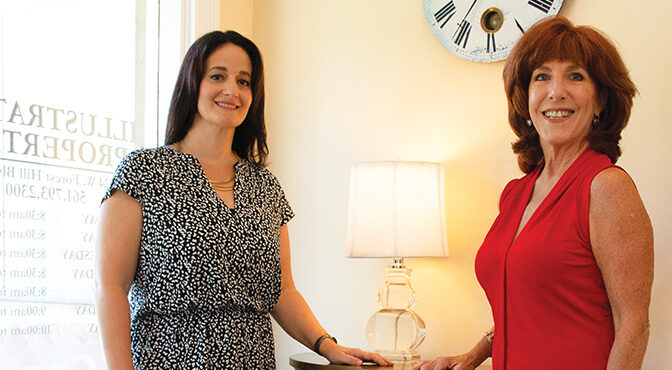
Wellington Bay Director of Sales & Marketing Wendy Paige is excited to offer this lifestyle concept to the community.

“Senior living is such a great option,” she said, adding that Liberty Senior Living, the developer and owner of Wellington Bay, offers an environment that simplifies day-to-day living for residents. “It’s such a great company, concept and senior living community. It means so much to me when children of our residents come and thank me for helping their mom or dad. They often say that many become more active again.”

Paige has been in the South Florida area for 16 years. She recently moved to Wellington from Jupiter.

“I enjoy the people and the community so much, I just bought a house in Wellington myself,” she said. “I got started in senior living by helping my parents find their retirement move, 15 years ago. I enjoyed helping them and learning about this option along the way, so I changed my career and have sold senior living ever since.”

Paige has represented all levels along the senior living spectrum: independent living, assisted living and memory care.

Married to her husband, Craig Watson, a PGA member who coaches the mens and womens golf teams at Palm Beach Atlantic University, the couple have five kids and seven grandchildren, including a set of twins. “We are a golfing family, but I am excited to learn more and get involved in the equestrian side of Wellington,” Paige said.

Nowadays, much of her time is spent in her vocation, representing her passion, Wellington Bay.

“It is the only independent living community in Wellington,” Paige said. “We will offer seniors a great option to live life to its fullest while simplifying the burden of living independently with many flexible programs.”

She looks forward to stewarding Wellington Bay from its construction into a living, breathing community of residents.

“When a resident decides to live in Wellington Bay, the entire property becomes their home, so no one has to give up anything by selling their house,” Paige said. “Seniors can choose from three distinct lifestyle choices in apartment homes, garden flats or villas, all in a no-hassle, maintenance-free lifestyle.”

Paige also noted the many different services and programs at the resort-style Wellington Bay community.

“Our whole-person wellness program promotes personal health and fitness,” she said. “We will offer a true indulgence of an on-site spa, beach-entry outdoor pool — while also having an indoor pool for those days when that might be a resident’s preference.”

The 65,000-square-foot Wellington Bay clubhouse features a bar, multiple dining options, billiards table, card rooms, a library, an art room and much more. “On our grounds, we will also have bocce ball, pickle ball, great spaces for walking and residents can even fish in our lakes,” Paige said.

A key benefit of Wellington Bay is the quality of the lifestyle.

“We want our residents to stay independent as long as possible. We take care of many items for them that have simply become more of an unwanted burden,” said Paige, giving examples with the weekly housekeeping, flexible dining program, transportation and all the requirements of home maintenance. “They are all part of the monthly rent, and our Wellington Bay concierge-style service is just a phone call away, to direct or help with any of the residents’ needs.”

As an upscale independent living community in the heart of Wellington, Wellington Bay will provide a place for seniors to move when they tire of taking care of a single-family home, without having to leave the community they love. “At Wellington Bay, they can continue to live an active lifestyle filled with a variety of social, recreational, cultural and educational possibilities every day,” Paige explained.

While Wellington Bay is new, the company behind it has a long-established and award-winning reputation in the industry.

“All of the other Liberty communities have been identified as Best Places to Work. Our South Bay campus in South Carolina has been recognized as a Charleston’s Choice, and Carolina Bay has been recognized as one of the Great Places to Live,” Paige noted.

She said that she couldn’t be more pleased about the location of the new Wellington Bay Senior Living campus. “All the businesses and people have been so friendly in Wellington, and this has to be the best chamber I have ever been involved with,” she said. “They do so much to promote local businesses, especially with this pandemic going on.”

As seniors age, Wellington Bay will be able to continue serving them.

“One of the true values of Wellington Bay will be access to on-campus multiple levels of care,” Paige said. “The Lisbet Health Center is a step-up program. As people continue aging, we will also have assisted living and memory support. One nice feature of our assisted living is we will offer two-bedroom units in addition to all the amenities, programs and services that make the lifestyle at Wellington Bay so great.”

She urged anyone interested in Wellington Bay to come aboard soon and help create this unique, new community.

“Those who move in early have the chance to help shape the community and enjoy the benefits of being a founding member,” Paige said. “We are excited to share with you our plans for Wellington Bay.”

Wellington Bay is located at 2590 Wellington Bay Drive. For more information, call (561) 335-5405 or visit www.wellingtonbayfl.com.

Facebookpinterestmail

Cardiologist Dr. Rishi Panchal Has Opened A New Practice Serving The Wellington Area

Cardiologist Dr. Rishi Panchal Has Opened A New Practice Serving The Wellington Area
Cardiologist and advanced peripheral vascular specialist Dr. Rishi Panchal recently opened the Ivy Cardiac & Vascular Center on the campus of Palms West Hospital with his own distinctly client-focused approach to patient care.

Trained at some of the nation’s most prestigious facilities for cardiovascular disease, Dr. Panchal was raised in Ocala horse country and was inspired by his father, also a doctor. Growing up, he loved to ride, play golf, fish and fly planes, receiving his pilot license at age 16. Through his father’s approach to patient care, he was influenced to continue serving as a physician.

“I was with another practice for two years before opening my own to serve the western hospitals,” said Dr. Panchal, who also has an office in Belle Glade.

Up to date with the latest knowledge and techniques available, he combines that with his experience at major academic institutions and his commitment to quality care.

Dr. Panchal’s clinical areas of interest include general cardiovascular care, including coronary artery disease, heart failure, venous disorders and peripheral vascular limb preservation.

“About one-half of my practice is a specialization in peripheral vascular disease,” he explained, noting that he works with the management of peripheral arterial and venous disorders utilizing minimally invasive techniques and cutting-edge technology. “I received specialized training at Yale University’s limb preservation program.”

Dr. Panchal was involved in national research trials at Yale for carotid and peripheral arterial disease. A contributor to medical textbooks and the author of published papers, he has presented at national cardiovascular conferences.

More than 600,000 Americans die from heart disease each year, accounting for about one in every four deaths, he explained. The term “heart disease” refers to several types of heart conditions, which are usually treatable or manageable.

“The most common type of heart disease is coronary artery disease, which can lead to a heart attack,” Dr. Panchal said. “Several medical conditions and lifestyle choices place people at a high risk for heart disease. Hypertension, diabetes, high cholesterol, obesity, smoking and excessive alcohol use can all contribute.”

He explained that education and guidance to patients regarding living a healthy lifestyle are as important as diagnoses and treatment of disease and disorders. “At Ivy Cardiac & Vascular Center, we provide comprehensive cardiovascular care to our patients,” Dr. Panchal said.

Training and experience at the Yale University Advanced Peripheral Vascular Interventional Program provided him with the specialized skills and knowledge to treat patients with peripheral arterial disease and critical limb ischemia.

The limb preservation program at Ivy Cardiac & Vascular Center is designed to decrease amputation rates and offer an improved quality of life for patients. Dr. Panchal has authored textbooks on the topic and received recognition for advanced peripheral vascular work and continues to be a leader in the field.

With chronic vein abnormalities being a common disorder found in some 50 percent of the population, such veins can become distended and become varicose or spider veins.

“Spider veins are typically small vessels seen on the surface of legs that look like a spider web. Though mostly cosmetic, these veins can be indicative of severe disease in the future,” he said, adding that when patients are bothered by the appearance of these veins, treatment via a minimally invasive technique can offer beautiful results.

Varicose veins are larger veins, which can become swollen, causing symptoms of leg fatigue, swelling, skin changes, restless leg syndrome and overall large, ugly veins.

“These distorted, dilated veins near the surface of the skin may look like a cord and are most commonly in the legs and ankles,” Dr. Panchal said. “They may not be serious initially, but they can lead to serious problems in the future. Many of the treatments available for these provide a minimal recovery period and allow the patient to walk out of the office after treatment.”

Dr. Panchal is fellowship trained in superficial and venous disease to provide the most comprehensive care for patients, as well as complete cardiovascular care.

His certifications include: APCA Registered Physician in Vascular Interpretation (2018), ABIM Cardiovascular Disease (2017), NBE Echocardiography (2017) and ABIM Internal Medicine (2014). His education and training include a peripheral vascular interventional fellowship at the Yale University School of Medicine, a cardiovascular disease fellowship at the Henry Ford Health System, a residency in internal medicine at the University of Florida, a doctor of osteopathic medicine degree from the Midwestern University Arizona College of Osteopathic Medicine, plus undergraduate work in biology at the University of Miami. Panchal is also a fellow of the American College of Cardiology and has memberships in the Society for Cardiovascular Angiography & Interventions, the Society for Vascular Medicine and the Chronic Limb Ischemia Global Society.

Ivy Cardiac & Vascular Center is located at 12983 Southern Blvd., Suite 205, on the campus of Palms West Hospital. His Belle Glade office is located at 1100 S. Main Street. For more information, call (561) 210-9495 or visit www.ivycardiovascular.com.

Facebookpinterestmail

Wellington, Premier Family Health And Palm Beach County Partner On COVID-19 Testing Testing Site

Wellington, Premier Family Health And Palm Beach County Partner On COVID-19 Testing
Testing Site

When initial plans for a pandemic testing site in the western communities didn’t come to fruition, an innovative and first-of-its-kind, three-way partnership was formed between Palm Beach County, the Village of Wellington and Premier Family Health to fill the void.

“The Western Communities Council had a desire to see if anybody else could get a testing site going after the initial effort for a testing site at Walmart in Royal Palm Beach could not be executed,” Wellington’s Assistant Village Manager Jim Barnes explained.

Barnes said that Wellington quickly volunteered to provide a site at the gymnasium facility at Village Park on Pierson Road.

“The county was interested and was looking for a municipality as a partner,” Barnes said. “The village stepped up with a location at the Village Park facility, and we already had a relationship with Premier for our wellness program.”

While the village supplied the site and Premier the healthcare expertise, the county was instrumental in getting the necessary testing kits.

“The county took the role of the state and provided the test kits, and Premier provided the testing staff,” Barnes continued. “We prepared a tri-party agreement, and we were off to the races.”

Premier Family Health’s Dr. Vincent Apicella was proud to be part of the area’s testing solution.

“We saw the need in the western communities,” Apicella said. “It was a no brainer. We used the Village Park gymnasium as the location, and we used our personnel and clinicians. The initiative came down from the Palm Beach County Emergency Operations Center to the village. It was a team effort, and we supplied the resources, strategy, procedures and time. Our clinicians sacrificed their time and effort and risked exposure. We were honored to be a part of it.”

The testing started May 13 and ended May 29 after the initial demand waned.

“It worked out even better than any party had anticipated,” Barnes said.

The county supplied the testing kits and Quest Diagnostics labs tested the swabs for the more than 2,000 patients who were tested. The objective was to test 2,000 residents of the western communities. For people with no insurance, the testing was a free service. Those with insurance had no co-payments.

Premier’s Chief Operating Officer J. Anthony Nelson said the program was done within the specified timeframe and was completed over 13 days.

Nurse Practitioner Elizabeth Lofaso of Premier Family Health ran the operation and said that the team members did it because they believe in serving the community. She was glad they were getting some recognition.

“People were shocked at how calm and safe feeling the operation was,” Lofaso said. “With the virtual waiting room, there was no handwriting. The computer filled out the forms, so everything was legible. The whole process took five to eight minutes from start to finish. It was a five-day to seven-day turnaround for the clients to get their results. The space was beautiful, there was social distancing and we are confident in the results.”

For patients interested in antibody tests, which reveal prior exposure, Premier Family Health was able to offer that procedure at its office separately.

A virtual waiting room was set up, similar to the web site Quest Diagnostics uses to take appointments, answer frequently asked questions and provide links.

“It was a portal through the village’s web site, so there was one web address and it was easy to handle,” Barnes said. “The village also fielded telephone call-ins to answer questions and set up appointments for those not using computers.”

The operation was one of the first walk-up testing sites; previous ones were drive-through facilities.

“I can’t say enough about the county. Their people were very responsive to schedules. In fact, all the parts worked well together,” Barnes said. “We are proud and pleased to have provided this service for the community of Wellington and surrounding areas.”

Lofaso agreed. “It was a unique effort to partner with a private company and a municipality, and it was the first such effort between the county and the village and a private company,” she noted.

If you are looking for a COVID-19 test currently, Palm Beach County’s web site provides a list of available locations at www.pbcgov.com/coronavirus. To learn more about the services offered by Premier Family Health, visit www.premierfamilyhealth.com.

Facebookpinterestmail

Pathologist Dr. Gordon Johnson Studies COVID-19 While Also Working To Help His Community Healthcare Guardian

Pathologist Dr. Gordon Johnson Studies COVID-19 While Also Working To Help His Community
Healthcare Guardian

As a recipient of this year’s Palm Beach County Medical Society’s 2020 Heroes in Medicine Lifetime Achievement Award, Dr. Gordon Johnson of Wellington nowadays spends his time giving back to the community while also studying the COVID-19 virus.

A pathologist with deep ties to Wellington Regional Medical Center, Johnson retired early, nearly a decade ago, to devote all his energies to unpaid work for Wellington and the wider region. During the current pandemic, that includes research work into the COVID-19 virus.

“As a pathologist, a doctor who studies diseases, it is natural that I would be interested in COVID-19,” Johnson said. “It requires between one to three hours each day for me to do research and study of the literature of therapies being used to remain current on the state of the virus.”

Much of his volunteer time over the past several months has been assisting in studying COVID-19 treatments.

“I am working with the retired physicians of the Palm Beach County Medical Society to study COVID-19 convalescent plasma for people that have had the virus,” Johnson explained. “Currently, we don’t yet know for certain that a person who has had the virus develops immunity from contracting repeated infections. It is something that needs more study.”

Johnson is one of thousands of physicians currently engaged in this type of research.

“It is a lot of time and work to stay actively involved and stay on top of the virus situation,” Johnson said. “I follow what we are finding out about the disease, such as where the research is and what we know about the tests. Some data are anecdotal results of antibody tests. There is so much that we don’t yet know.”

As the community responds to the virus emergency, Johnson is doing some consulting on sports in the village and the possibility of normalizing the resumption of basketball in Wellington. They are discussing the measures needed for the players and coaches to make sure CDC recommendations and standards are being met relative to protection, social distancing, hygiene and cleanliness, and even how to take the participants’ temperatures.

Johnson stressed that returning to daily life will require a great uptick in testing. “Testing is the key. We’ve got to test, then trace connections, then isolate those exposed. That’s the method: test, trace, isolate,” he said. “It’s a big initiative to get all this out to the community. There is a lot to be done. We are sequestered, and you think you can’t do something, but with ingenuity and hard work, you can.”

In retirement, Johnson, who will be 70 on his next birthday, spends his time in service to others.

“I am running into men and women all the time who are afraid to retire,” said Johnson, referring to one of his pet causes. “Their job defines them, and they fear they will have no purpose once they retire. ‘What do you do all day?’ they ask.”

From picking up trash along the highway, to advocating for future citizens whose maladies mean they can’t pass a traditional citizenship test, to providing transportation for oncology appointments, to consulting on cancer and other diagnoses daily, to reporting up-to-date, frequent, expert presentations to spread awareness and knowledge on COVID-19 via Zoom meetings, Johnson is busy each and every day of his “quieter” years.

“I have plenty to keep me occupied as a husband, family patriarch, father and grandfather, but I would like to provide some insight beyond this,” Johnson said. “I have managed to have a very good life. I have had some very nice positions in medicine, and now I get to do fun things. I have spent the last 10 years giving back. I work just about every day, although no one pays me in money anymore, and that’s what it is all about.”

Married for 42 years to his wife Linda, they have three sons: Gordon, a molecular biologist; Grant, a certified financial planner; and Gareth, a concert violinist.

Born in El Reno, Oklahoma, about 30 miles northwest of Oklahoma City, Johnson attended St. Louis University for his medical degree and practiced in the St. Louis area for many years.

Moving to Wellington in 2001, Johnson worked closely with Wellington Regional Medical Center. He now serves on the hospital’s board of governors.

“I also chair the tissue review and blood component utilization committee and sit on the safety committee at the hospital. Wellington Regional has a very good record on treating COVID-19,” said Johnson, who also serves on the board of the Wellington Community Foundation and is a member of the Council of Dads.

A typical week may find him providing home repairs to help seniors age in place; activities, scholarships and clothing for less fortunate children; a variety of help for veterans; and more, plus assistance in raising money to fund these activities. “I am drinking from the saucer,” Johnson said jovially. “My cup is running over.”

Johnson is also a mentor to students in elementary through post graduate school and helps facilitate large disaster relief efforts, such as the recent pledge for $2 million worth of roofing material for the Bahamas, in addition to many airplane loads already delivered.

“Today, the mentoring is done by keeping in touch by telephone,” Johnson said. “Of course, many of my activities have been preempted by the virus and the social distancing rules. So, I’ve had to look for other avenues to stay involved.”

Johnson warned people against being defined by their job, to instead make a career of helping their community, and when they retire, help their community as both vocation and avocation.

“I am promoting a lifestyle of a life well lived,” Johnson said.

Johnson himself wants to be defined as a guardian of his community’s healthcare.

“I want to be remembered for helping local students, perpetuating science, fundraising and for my efforts beyond healthcare,” he explained.

He invited fellow residents to add meaning to the “quieter” time of their lives in community service. “Come join us, it’s a start,” said Johnson, inviting people to support the Wellington Community Foundation.

To learn more about the Wellington Community Foundation, visit www.wellingtoncommunityfoundation.org. As for Johnson’s lifetime achievement award, the awards ceremony in May was postponed. It is currently scheduled for October.

Facebookpinterestmail

Stories From Inside Wellington Regional Medical Center During The Global Pandemic Healthcare Heroes

Stories From Inside Wellington Regional Medical Center During The Global Pandemic
Healthcare Heroes

For most families, by the time they are expecting their second child, they are already experienced veterans with the whole delivery event. Since they are birth-experience veterans, parents are usually not as nervous because everyone knows what to expect. It is more or less routine. The father helps coach the mother and tries to keep her focused and calm; some dads even cut the umbilical cord as their first official parenting act. It happens regularly every day across the country — then the COVID-19 pandemic hit, and healthcare was suddenly anything but routine.

For Zach and Amanda Threlkeld, they were excited about the impending arrival of their second son. Because of visitation restrictions due to COVID-19, they already knew that Zach could not be in the room during Amanda’s cesarean section. They were disappointed, but they understood that the restrictions were in place to protect patients and visitors, as well as the medical team.

“I was told about a week before my son’s delivery,” Amanda said. “I was upset because I wanted him to experience the birth as well. I knew the restrictions were in place for everyone’s protection, and I was able to mentally prepare for him not being in the room.”

However, that was when Wellington Regional Medical Center nurse anesthetist Robert Stroud had an idea. He would connect Amanda and Zach through FaceTime and hold the phone so Zach could be part of the birth process. Zach was thrilled, and Amanda felt relieved as well.

“It made me comfortable that Zach would not be left out,” Amanda said. “He could still talk to me and calm me down, which made me feel a lot better.”

William Case was born that day weighing 9 pounds, 13 ounces and has joined his big brother James Ryan, 2, to make the Threlkeld home just a little more crowded. However, with a new baby in the house, nobody in the Threlkeld family wants to miss any part of William’s milestones. And because of the quick thinking of Stroud, Zach did not miss William’s biggest milestone — his birth.

A Meaningful Life

Beth Eyestone was a giver. As a licensed mental health counselor who primarily specialized in sexual abuse, she was quick to smile and the first to raise her hand to volunteer. She was selfless with her time and always wanted to help people… and in the end, that is exactly what she did — help others.

Tragically, Beth died at WRMC on Memorial Day in the middle of the COVID-19 pandemic after she suffered a significant stroke. Before her death, she had made her wishes to her husband clear. She wanted her last act to be the ultimate gift — she wanted to be an organ donor.

Allen Eyestone, her husband for 31 years, knew his wife was a hero, but what he found in those last few minutes of her life was that she was also surrounded by nursing heroes who were committed to honoring Beth for her generous gift. As the transport team arrived and was preparing her, a dozen or more nurses who had been involved in her care gathered in Beth’s room, and Allen was encouraged to tell them about her life.

And he did. He focused on how she had committed her life to helping others, and the donation was just one more selfless act in a lifetime of service to others. Eventually the donation preparations were complete, and the time had come.

“Everybody was crying, and all the nurses in her room came to attention as they began to take her from the ICU to the operating room,” Allen said. “As we walked down the hallway, another 10 to 15 nurses on the unit came out of the rooms and stood at attention as we passed. They all thanked us as we passed. It was very moving.”

During a devastating time, the nurses were a comfort.

“The nurses changed my life because I had no family there with me. But I realized I did have my family there, and they were the nurses at Wellington Regional,” Allen said. “Nobody could have acknowledged her the way they did. I felt so honored that I could say goodbye how I did because of the nurses.”

In the midst of the COVID-19 pandemic, good could came from a terrible situation, as Beth eventually donated both her kidneys, her liver and her eyes so others could have a better life.

She was a hero, but Allen believes the Honor Walk and the way the nurses treated both Beth and himself at the end, made them heroes, too.

Protecting The Protectors

When thinking about healthcare heroes, it is easy to picture frontline caregivers, like physicians, nurses or respiratory therapists performing lifesaving medical procedures on critically ill patients. But there are other departments in the hospital that are vital in protecting direct patient caregivers and allowing them to safely focus on their critical duties.

Wellington Regional Medical Center uses an inventory method called Just in Time (JIT). The principle of the strategy is to keep a reduced amount of supplies stockpiled and replace them just as they are being used. That meant the hospital had about a week of supplies, like personal protective equipment (PPE), on hand when the full scope of the pandemic was understood.

Jim Watson, director of supply chain at WRMC, knew that there were only a few days of certain types of PPE stockpiled. The hospital needed to change its supply chain operations from JIT to stockpiling PPE. And it needed to do it quickly.

“The minute they announced the travel bans, we saw the writing on the wall and started to act,” Watson said. “We reached out to our home office and started the process of increasing our orders. Many of those items were backordered, so we began to activate local options while the national supply chains were opening. That local level of supplies secured us about a month of PPE, by then the national external support through the home office began to kick in. We also can’t underestimate the importance of private donations of homemade masks and shields to help protect our staff in the early phases of the pandemic.”

As part of the plan to protect PPE, WRMC sequestered the excess equipment, removed supply boxes from the floors and instituted a checkout system to reduce the amount of waste. Slowly, between the newly opened supply lines and the protection of existing PPE, the supplies began to increase. With increased PPE supplies came protection for the medical staff and patients.

“As a company, it was a combined logistical effort between each facility of Universal Health Services (UHS), the home office,” Watson said. “It was an insane amount of work and coordination with the home office and the hospital to find certain things and get them allocated to the units. I feel a lot more comfortable now than I did a few months ago.”

Heroes come in many shapes and sizes, but a crisis usually brings out the best in people. But one thing is for certain, the way the healthcare industry has responded to the worldwide pandemic has been inspirational. Putting their personal health and lives on the line each day to care for patients during the most vulnerable moments of a person’s life may be all in a day’s work for healthcare providers, but for the people who depend on them for their health, the commitment has been inspiring.

Facebookpinterestmail

When The Pandemic Shut Down Programs, Wellington’s Rec Department Sprang Into Action Virtual Recreation

As the world began locking down, the Village of Wellington immediately started brainstorming on how to continue serving the community — virtually.  Among the questions was how to continue the village’s award-winning recreation programs, despite mandated closures.

Through the new “Virtual Recreation Department,” Wellington’s Parks & Recreation Department found new ways to bring fun and educational activities to residents.

“During this difficult time, where our popular parks and recreational facilities remained closed for weeks, and our residents must practice social distancing, we wanted to provide virtual recreation opportunities for residents of all ages to stay active and healthy,” Parks & Recreation Director Eric Juckett explained. “Through a series of staff discussions, we decided the best way to continue offering our programming was to offer virtual classes using our current instructors.”

With recommendations and policy changes happening almost daily, the team knew that creating a virtual program platform was no simple task. Instructors had to be trained on new tools and technology, while simultaneously rethinking their methods for providing services.

“The greatest challenge that we came across was ensuring security to account for setting up these classes,” said Juckett, who noted that only authenticated users are able to join the online sessions. “I am proud of our Parks & Recreation staff, including Kristine Jarriel, Chris O’Connor, Branden Miller, as well as Jenifer Brito of the Community Services Department, for their hard work and dedication in getting our virtual programming off the ground.”

Participants can gain access to classes ranging from yoga and meditation to crafts and competitive cheerleading. Does your little one miss that tumbling class? Wellington has you covered. Been too shy to try a group class in Expressive Dance or Jazz Funk? Here is the chance to try something new from the comfort of your home. Wellington even offers virtual Zumba classes, including modified and chair options for participants with limitations.

All you need is a device capable of connecting to the internet using the popular Zoom app, such as a smart phone, laptop, tablet or desktop computer. “All of our programs are interesting and engaging. We have programs for all ages from toddlers to seniors. Our virtual bingo is one of our most highly requested programs. Our team had to employ very creative thinking to continue providing this popular program,” Juckett said.

The classes are all offered for free on a first-come, first-served basis, so participants are encouraged to sign up early before a class fills and the registration closes. Classes are often locked once they begin.

“The virtual programs have been very successful. Not only have we consistently seen a large number of people partake in these classes, we have also had participants from other states join in, as well as many new participants who are trying new activities for the first time,” Juckett said. “They will absolutely continue for the time being while we figure out how to adapt to future challenges.”

Since its launch in April, the Virtual Recreation Center has been so effective that the team continues to expand the menu of class offerings. Currently, residents can find a live session to fit their schedule and interests Monday through Saturday. The village also expects to keep offering a variety of classes during the summer months.

Wellington updates the schedule for virtual programs regularly through the village’s social media channels, including Facebook, Twitter and Instagram.

While the virtual programs continue to evolve, village officials continue to monitor the changes in recommendations regarding the COVID-19 pandemic. Like much of the country, Wellington is slowly beginning to open some of its in-person offerings.

“Our Aquatics Complex and Tennis Center are now open. The pool is open for lap swimming and every lane is available. The Tennis Center is open for singles and doubles play. Our fields are available for open play for groups of 10 or less at this time,” Juckett said in late May. “We are proud to offer a modified summer camp this summer during these difficult times. We continue to look to add services and programs as we navigate the future.”

The best place to find updates and information about future recreational programming, events and facility openings is www.wellingtonfl.gov/parks.

Wellington’s vision of a Virtual Recreation Center was made possible through sponsorships from various community partners, including Baptist Health South Florida, Wellington Regional Medical Center, Priority Towing, Healthy Partners, Dedicated Senior Medical Center, Florida Blue, the Area Agency on Aging Palm Beach/Treasure Coast, Harbor Chase of Wellington Crossing and Humana.

“We are grateful to our generous community partners for their continued support through these difficult times,” Juckett said. “These programs provide a fantastic service for the residents of Wellington and anyone else who wishes to participate. Many of these excellent programs are an extension of what we normally offer in person, and they have been well-received by our participants accessing them virtually.”

To learn more about Wellington’s virtual programs, e-mail Chris O’Connor at coconnor@wellingtonfl.gov or call (561) 612-6697. To access the Virtual Recreation Center, visit www.wellingtonfl.gov/virtualrec.

Facebookpinterestmail

Wellington’s Juliana Wandell Graduates From FAU With A Double Major At Age 17 College Grad

Wellington’s Juliana Wandell Graduates From FAU With A Double Major At Age 17 College Grad

Wellington teenager Juliana Wandell graduated last month from Florida Atlantic University with dual bachelor’s degrees in computer engineering and computer science. At age 17, she became FAU’s youngest student ever to accomplish this feat.

Wandell, who goes by the nickname “Jewels,” has been on her accelerated educational trajectory for a long time — since she was 24 months old, in fact.

“She started pre-kindergarten at St. Joseph’s Episcopal School when she was 2, and they bumped her into kindergarten,” recalled Rosie Wandell, her mother. “Headmaster Kay Johnson saw something in her.”

From there, it was elementary school, several years of home schooling, and then college credits that began accruing in the ninth grade.

“At FAU High School, you take high school courses, as well as some electives that count as college classes, like my Spanish and engineering classes,” Jewels said. “You then apply to FAU and, from 10th grade onward, take a full course load on campus.”

She didn’t start out with the goal of graduating from college at age 17. In fact, she initially tried to function at her own grade level.

“I got bored,” Jewels recalled. “If a school put me back in the grade I was supposed to be in for my age, I’d hate that I was repeating things. I’d wait until the last minute to do my assignments.”

When she was 11, Jewels tagged along with a friend — also home-schooled — who signed up for FAU High School’s Summer Engineering Camp. District Science Coordinator Allan Phipps took notice, urging her mother to get Jewels into the program.

Unfortunately, the fall term was due to start within days. Yet no mere schedule was going to interfere with their determination. Phipps introduced the family to Dr. Joel Herbst, superintendent of FAU Lab Schools District and FAU High School Associate Director David Kelly. The end result was that Jewels was admitted to the program.

“I was a lot more adult than those in my age range, and they wanted me to go directly into 10th grade, but I wanted a ninth grade ‘boot camp’ on campus first,” Jewels explained. “I wanted to enjoy myself, be a kid. On campus, I tried not to tell people how old I was most of the time, but you can only say ‘my parents drove me’ so many times before they started to ask, ‘What’s up with that?’”

Jewels was 15 when she graduated from FAU High School in May 2018, and 17 when she graduated from the university itself in May 2020 with a grade point average of 3.797.

“The academics weren’t easy all the time, but I liked being in the classes I was in,” she said. “My senior design project took a year, but I created virtual reality gloves with haptic feedback. Typical sensors don’t go over your hand, nor do they engage all your fingers. They may be able to grab an object, but mine can be integrated with games and tools and bend 0 to 90 degrees.”

Still, it’s not like there weren’t challenges along the way. “A lot of 20-year-olds don’t want to hang out with a 12-year-old, which I understand, but it took me a while to figure out that some of the students who were saying they were going to be my friend, were only going to be my friend until we were through with the course,” Jewels said. “They only wanted me to tutor them!”

So, although Jewels had plenty of “acquaintances” who would smile and wave if they passed her on campus, she didn’t make any true friends until later on in her educational career.

“It wasn’t the worst thing in the world,” she said. “People were nice. I always had someone to sit with and talk to — and I had kept some of my high school friends — but it wasn’t until I joined a sorority and a bunch of honor societies that I was able to build real friendships.”

Her parents Rosie and Eric Wandell said they never treated Jewels like a child; they treated her like an equal.

“My husband and I supported Jewels together. If it wasn’t for that, we wouldn’t have been able to do everything we did. He was a fireman, and I had a physical therapy practice. Jewels did her robotics things all over the state, and on the weekend was Stetson Young Scholars for high-achieving students,” Rosie recalled. “One or the other of us would drive her to the middle of the state Friday after school and drive her back on Saturday or Sunday — for three years. She would learn about history or rocket science from Stetson professors, and it wasn’t arranged by age groups. She would be 6 or 7 years old in with 10- and 11-year-olds making bottle rockets.”

“It was very challenging,” Eric added. “But we’ve got a fighter. She stands up for herself, and we are very family-oriented.”

One of her favorite pastimes came from her father.

“When I was really young, instead of bedtime stories, my dad would tell me stories surrounded around this character and let me make decisions for the character,” Jewels said. “It was Dungeons & Dragons — a very nerdy game — and I was his only player, but I loved it.”

At Jewels’ graduation from FAU, it would have been easy to find her in the crowd. Where some kids paint “Hi, Mom” or flowers on their mortarboards, Jewels was sporting the one with a high resolution 64×64 LED matrix flashing 50-plus tiny videos. She had used a USB-based microcontroller development system called a Teensy, her soldering skills, her cable management skills and her ability to edit programming using computer code to entertain onlookers with her own mini version of a sports arena Jumbotron — on her head.

At 17, she’s already sizing up Pratt & Whitney, NASA, Northrop Grumman, Blue Origin and SpaceX of the aerospace industry in an effort to advance her interests in additive manufacturing (the reverse of using a lathe, which removes something to create an object) but is hoping to stay in South Florida, at least for now.

When not engaged in her studies, Jewels enjoys video games, Dungeons & Dragons and painting with watercolors, as well as hanging out with her teacup poodle Princess and her boyfriend, Ryan Scupt.

“She’s an only child,” Rosie said. “Otherwise, I don’t know what we would’ve done. I like to say, ‘God only gives you what you can handle.’”

Facebookpinterestmail

Bright Students Lead The Way At Wellington-Area High Schools Young Leaders

Bright Students Lead The Way At Wellington-Area High Schools  Young Leaders

Showing endurance, flexibility, perseverance and a sense of decorum few others have been called upon to muster in their young academic careers, the Class of 2020 has made history. The two public high schools serving the Wellington community graduated a combined 1,334 students in this pandemic-altered year filled with unique challenges.

Principal Cara Hayden at Wellington High School said that the school is incredibly proud of its 635 members in the Class of 2020. While the traditional graduation ceremony at the South Florida Fairgrounds was canceled, a virtual ceremony was held online Monday, June 1, featuring speeches from valedictorian Max LeGates and salutatorian Hersh Prakash.

“Our seniors were instrumental in our transition to remote learning,” Hayden said. “Their focus and maturity helped our teachers maintain continuity in the classroom. They responded to the loss of several senior traditions with kindness and promoted the most innovating ideas. Max and Hersh are wonderful representatives of the grace and maturity demonstrated by our senior class.”

Principal Darren Edgecomb at Palm Beach Central High School said that his 699 graduates rose to the occasion. “Of course, it has been an unprecedented year, and our seniors have led the way,” he said. “It is due to their endurance, tenacity, intelligence and confidence that we were able to persevere.”

Palm Beach Central’s class was led by valedictorian Jacob Fingeret and salutatorian Ian Mutschler. “Jacob and Ian are extremely popular, and they helped to lead the way in the Class of 2020,” Edgecomb said. “The class as a whole rose to the occasion, and these two phenomenal young men were truly leaders.”

Wellington High School
Valedictorian Max LeGates

Max LeGates lives with his parents and has two older brothers. The oldest one graduated from Roanoke College two years ago, and the middle brother just graduated from Franklin & Marshall College. LeGates starts in the fall at the University of Florida, studying environmental science.

LeGates decided to strive for valedictorian when he discovered that he was ranked first after his freshman year.

“I wanted to keep up my hard work and keep my position,” he said. “There were no defining moments because I never knew if I would stay valedictorian, but I worked harder and harder every year to keep my position.”

LeGates graduated with a grade point average of 4.0 and an honors point average of 5.40. In the time before the virus hit, he ran varsity cross country since his sophomore year and participated in the Leadership Grow program. “I was also junior and senior class treasurer and involved heavily in student government,” LeGates added.

LeGates found virtual schooling to be challenging. “Transitioning to online learning was quite difficult for me. I’m not used to learning online. The hardest thing for me was trying to stay awake for first period while still lying in my bed! A typical day is very much like real school, except lonely and more boring, but I got used to it and still tried to succeed.”

LeGates is optimistic about the future. “I know the world is going through a tough time right now, but we are all working together, and we will come out stronger,” he said. “I’m excited to start my four years at UF.”

He urged his fellow graduates to never stop chasing their dreams. “If you work hard and keep your eye on the prize, you can accomplish anything,” LeGates said. “My advice for future seniors is to focus on school but also ensure that you have a good time as well. Don’t get caught up in being the best or else you’ll lose yourself in the process.”


Wellington High School
Salutatorian Hersh Prakash

Hersh Prakash completed his high school career with a 3.93 grade point average and an honors point average of 5.55. He lives with his parents and his sister, who is two years older.

It was while attending his sister’s graduation when he was a sophomore that he decided to try for valedictorian or salutatorian.

“I was sitting in the auditorium with maybe 4,000 people and 600 kids who had all worked extremely hard to get through school and graduate,” Prakash remembered. “I saw the salutatorian give a speech, and I got chills. I knew I would be salutatorian or valedictorian because I wanted to leave my mark at Wellington High School.”

Last year, Prakash played soccer. He is a member of the National Honor Society and a math tutor. He works part time as a loan processor and will soon get his real estate license.

During the virtual school era, a typical day began at 8 a.m. “I join the Google meets for my classes. In the afternoon, I go for a run and study for the real estate exam. I go to sleep around 11 p.m.,” he said.

Prakash will be attending the University of Florida where he will major in business and real estate.

“I am extremely optimistic about the future because the country is never going to stop,” Prakash said. “Kids, such as myself, want to see the world be a better place. I recommend trying to have a positive mindset as a whole. That way, current events won’t affect us so much.”

Prakash is also excited to be voting for the first time this year. “I am extremely excited to have a voice and experience being in a voting booth,” he said. “It is one vote, but one vote matters.”

Palm Beach Central High School
Valedictorian Jacob Fingeret

Jacob Fingeret has a 15-year-old brother and a sister who just turned 11. He graduates with a grade point average of 4.0 and an honors point average of 5.5. He has been rated at the top of his class since he was a freshman.

“When I learned that, I thought, ‘Maybe if I try, I can maintain this,’” remembered Fingeret, who will be attending the University of Florida as a pre-med major.

Before the virus hit, he played soccer and water polo, and he served as treasurer of the National Honor Society and a member of the history, environmental and social studies honor societies. Along the way, he also found time to work at Wawa.

The challenge Fingeret noticed most with the switch to online schooling was the workload.

“It was an interesting change,” he said. “I felt like we started doing more work. Maybe it was because the teachers gave assignments, and you didn’t have any time at school, but definitely adjusting to keep your schedule and to keep up with everything was challenging.”

To his fellow seniors, Fingeret suggested that they “expect the unexpected.”

“Not everything is going to go your way. Assess the situation and adapt to it. So long as you have air in your lungs, you are probably doing pretty good,” he said.

A typical home-schooling day for Fingeret included a lot of learning.

“I get up at 8:30 a.m. and do Google meets for my classes,” he said. “I learn calculus that I may or may not understand. The computer doesn’t bother me much. I take college classes that were online before corona. At 3 p.m. I exercise, then do homework until 9 p.m. From 9 p.m. to midnight it is free time for family time or Netflix, then bedtime.”

As for next year’s seniors, Fingeret’s advice is: “Always work as hard on schoolwork as you can but remember that friends are most important. It all ends pretty fast.”

Palm Beach Central High School
Salutatorian Ian Mutschler

Ian Mutschler lives with his parents and has two sisters — an older sister attending college in Jacksonville and a 15-year-old younger sister at home. He will be attending Florida State University, where he plans to major in meteorology.

Mutschler graduated with a 3.9474 grade point average and a 5.3662 honors point average.

“After my sophomore year, I saw I had a shot and thought it would be pretty cool. I wanted to go for it,” explained Mutschler about being named salutatorian.

Of course, he also got some parental encouragement during his academic journey. “My mom pushed me along the way,” he said.

Mutschler was a member of the National Honor Society, active in the Student Government Association and works as a lifeguard at the Wellington Aquatics Complex.

One of the challenges of switching to online schooling was the “bizarre transition of trying to learn calculus over a computer screen. It is not easy. I’m more of a face-to-face person,” Mutschler said.

Mutschler remains optimistic about the future. “I’m confident that there will be a vaccine or some kind of herd immunity,” he said. “I am already seeing signs of re-opening, and that gives me hope. I think that maybe in a few months or a year, things will be back to normal.”

Mutschler offered some advice to his fellow graduates. “Having a high number is great, but don’t forget your friends and the people you meet,” he said. “They are much more important than a number. It is cool to be able to speak at graduation or to have a bunch of cords, but don’t forget your friends. They are more important than your GPA — and enjoy things while they last because, as we have seen, it can all be pulled away at any time.”

To those who will be seniors next year, Mutschler suggested that they may not want to follow his exact example. “Don’t kill yourself like I did,” he said. “I’m not saying it wasn’t worth it; but focus on relationships. That is going to be what builds your character more than anything.”

Facebookpinterestmail

Bringing You The Best Of Wellington Since 2004