Category Archives: Feature Stories

Wellington The Magazine, LLC Featured Articles

Horse Roots Run Deep In The Jayne Family Of Our Day Farm

Horse Roots Run Deep In The Jayne Family Of Our Day Farm

The horse business runs through their veins. Maggie, Charlie and Haylie Jayne are sixth-generation equestrians. They were raised in the barn — and that’s a good thing.

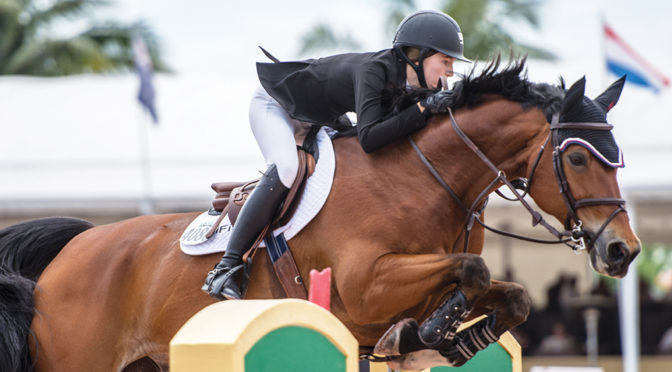
They are part of a well-respected family of equestrians who grew up outside of Chicago but put down roots in Wellington during the Winter Equestrian Festival. They have contended at the elite levels in both the hunter and jumper divisions, earning titles at every level, from small ponies to Grand Prix.

Their father, Alex, and mother, Linda, run the highly successful Our Day Farm in Elgin, Illinois, and that’s where their three children were introduced at an early age to the wonderful world of horses.

Maggie is the first born and became a professional rider after graduating high school. Charlie, the middle child, has had a very successful show jumping career, highlighted by winning the $1 Million Grand Prix in Ocala in 2015 aboard Chill R Z. Haylie is the youngest and has made a name for herself as a top hunter champion.

They are competitors and trainers, who have dozens of clients participating in many classes representing Old Day Farm in Wellington. As riders, they are looking forward to the current season at WEF.

The 34-year-old Maggie is focused on preparing Arizona ODF in the 7-year-old young jumpers division and Kaptain Kirk in the pre-green hunters. Her biggest career victory was winning the prestigious International Hunter Derby at the Devon Horse Show — twice.

“I am gearing up for Week 2 and Week 4 on the grass [at WEF],” said the 32-year-old Charlie, one of the top riders in show jumping who travels to major events around the world. “I’m aiming my top two horses for the Thermal and Ocala millions at the end of circuit.”

Haylie, 30, is determined to continue her achievements from last season.

“I’m lucky enough to have a really exciting first year green hunter, Queen Celeste,” she said. “She was circuit champion last year in the greens, and I would love to repeat that.”

She is also enthusiastic about the prospects for Limini, an 8-year-old that she is pointing toward competing in the 1.40s.

Hardin Towell isn’t surprised at the Jayne family’s accomplishments together. Towell, 31, a successful Grand Prix competitor and trainer based in Wellington, met members of the family at the Washington International Horse Show in 1999 when he was about 10 years old. Charlie was on horses, and Towell was still on ponies.

“They are the best family,” Towell said. “I consider them as much my own family as my own. Mr. and Mrs. Jayne have always been the best. They, the three kids, work so well because they all have their own roles in the business.”

The experience and versatility of the Jayne family helps them produce winners at every level in the U.S. and globally. So does their own ability to ride and win. It is their business, and with dozens of customers, it can be daunting.

“Haylie and I mainly focus on preparing and developing our client’s horses to their full potential,” explained Maggie, who hasn’t tired of working so closely with her siblings. “Charlie plans his show schedule to peak his Grand Prix horses for success. Of course, working in a family business has its challenges, but the pros far outweigh the cons.”

Charlie attended Florida Atlantic University, getting a degree in business management while competing on the circuit.

“We all have our different places within the business and have been able to work really well in our spaces,” he said. “Maggie has always been the leader. Our parents have been great influences and continue to guide us every step of the way.”

Haylie graduated from the University of Georgia in December 2009 with a degree in classical cultures. She competed on the equestrian team and helped the team win three national titles and four SEC titles. She also won the individual national championship in equitation over fences in 2009. She met Nate Rolfe in college. They were married in 2010 and became parents five years later when Oliver was born.

“Maggie has the most discipline on and off horses,” Haylie said. “Charlie is very laid back and typically can relax any horse he rides. I think I’m somewhere in between. Maggie and Charlie are honestly two of my best friends. It’s always great to know I have an amazing support team around me. I think it was harder [to work together] when we were younger, but we’ve all really settled into our roles.”

They are dynamos around the barn and in the rings, but they leave time to relax away from the horses.

Maggie enjoys cooking and yoga and playing with her puppies. Charlie plays cards every Monday and plays basketball every Tuesday. Haylie reads and works out, using a combination of Orangetheory, Pilates and running.

“Nate is my best friend and the reason I’m able to balance everything,” Haylie said. “Oliver was born in November 2015, and he is a ball of energy and love. I wouldn’t say I have much free time, but I would say that working with family allows me freedom to spend every extra minute I have with Nate and Ollie.”

She also enjoys the diversity of it all.

“The best thing about my job is that no two days are same,” Haylie said. “Some days I ride all day and other days I’m working with students. There are new challenges every day, yet horses make it all feel peaceful.”

Maggie gets to work with people who share the same passion for the sport and drive for excellence that is the underlying concept with all her family members.

“Even though each member of my family may have a slightly different approach or way of explaining something, our methodology toward developing horses and riders to their fullest potential is the same,” Maggie said. “There’s a little bit of an imprint from each of us in every horse and rider we produce; we all bring something to the table.”

The Jayne family’s Our Day Farm has locations in Illinois and Wellington. Visit www.ourdayfarm.com to learn more.  

Facebookpinterestmail

The Fodder Group Aims To Revolutionize How Wellington’s Horses Are Fed

The Fodder Group Aims To Revolutionize How Wellington’s Horses Are Fed

There’s a feeding revolution taking place in Wellington. It’s not a new way to feed hundreds of hungry people. Instead, there’s a new product designed to positively impact the daily diets, health and performance of a highly treasured segment of Wellington’s population — its horses.

The product is called Fodder, and its creators believes that it will positively impact the daily diets of Wellington’s equestrian inhabitants.

Thanks to the Fodder Group Inc., this nutritious, fresh food is now available to the thousands of horses here in Wellington, as well as livestock (cows, pigs, sheep and goats) and poultry (chickens, ducks and turkeys) around the country — 365 days a year.

As far as horses are concerned, Fodder is an appropriate feed for all equines, from ponies to Thoroughbreds.

According to the Fodder Group’s Florida dealer and Wellington resident Justin Hickey, Fodder starts with a seed and becomes a fully-grown nutritious livestock feed in less than a week — just four days, to be precise — using a hydroponic growing system.

Designed in drought-ravaged Australia and built here in the U.S., it has taken a dozen years to transform the Fodder concept into a concrete reality.

The story about Fodder’s nutritious value is as newsworthy as how quickly it can grow. According to Hickey, Fodder is all-natural, more than 90 percent digestible, more cost-effective than hay, reduces methane output, reduces colic in horses and is healthy for the animals, as it contains high amounts of protein, starch, vitamins and minerals. Not to mention, the horses, cows and poultry seem to like it, too.

Hickey explained that in 90 days, clients will be able to see the results in horses by feeding them Fodder.

“After eating Fodder, everything about them is healthier — their hoofs, coat and skin are in better shape,” he said. “The temperament of the horses also improves. And, with cattle, the meat is better tasting and healthier.”

If those animals knew the consistent nutritional benefits of what has been designed for them, they’d be waiting at the trough, eagerly anticipating their next meal.

Credit for this new feed supply goes to the Fodder Group, which has pioneered a four-day growing cycle which has an optimal yield, is nutritious and is affordable. One of the key aspects of the four-day growing cycle is the Fodder Group’s proprietary LED lighting system. The images of the Fodder after each day of the four-day growing cycle are eye-opening and attention-grabbing.

The Fodder, and the way it’s grown, represent a turnkey solution to keeping horses, livestock and poultry adequately and nutritionally fed, every day of the year, at a price which the market can bear.

According to Hickey, Fodder is grown in an indoor hydroponic environment. There are two different types of growing systems, the FG20 transportable system and a permanent onsite system. The FG20 transportable system is similar to the trailer of a semi. You can buy a system and grow the Fodder yourself, or you hire the Fodder Group to make daily deliveries.

The onsite system can be purchased and placed on your property, or one of your existing buildings can possibly be retrofitted into an indoor growing system. In both the transportable and onsite systems, the indoor environment — the lighting, temperature, humidity and air quality — are controlled, which creates a trouble-free and fast-growing environment.

When you buy the onsite system from the Fodder Group, Hickey is quick to point out that each purchase includes installation, a comprehensive operation manual, full training, and ongoing backup and support. “We’ll hold your hand as you get used to operating the entire system,” Hickey said.

Each transportable system will yield 1,470 pounds a day of fresh Fodder. According to Hickey, each competitive equestrian horse based in Wellington can require as much as 40 pounds of Fodder a day. If you do the math, nearly 40 horses a day can be adequately fed from each daily yield from one transportable unit of the FG20 system.

While every horse owner may not buy Fodder for daily consumption, Hickey believes that many horse owners will buy Fodder to supplement other feed sources.

In today’s disposable society, the Fodder Group is proud to stand behind its product. The systems are designed to last — more than 20 years in many cases. And each part in this system is also made in the USA.

In addition to the 13,000 or so horses living in Wellington during the winter, Hickey will be marketing Fodder in Florida to cattle ranches, race tracks, zoos and to other animal outlets.

To get more information about this nutritious feed, contact Hickey at (561) 248-3344 or florida@foddergroup.com to start ordering regular deliveries of Fodder, which is at the forefront of the feeding revolution taking place in Wellington.

For more information about the Fodder Group, visit www.foddergroup.com.

Facebookpinterestmail

Jacek Tomasik Embraces His Work As Wellington’s Building Official

Jacek Tomasik Embraces His Work As Wellington’s Building Official

Wellington has seen an amazing amount of growth over the past two decades, and Building Official Jacek “Jack” Tomasik has been there making sure everything is done safely and according to the village’s strict codes and regulations.

There are members of the Wellington team who have been here for the long haul, and with 19 years of tenure with the village, Tomasik is one of them.

“The building official is a position basically in charge of the Building Department,” he said. “I am the happy person to be just that.”

Tomasik and his family built a life in Palm Beach County from the ground up after moving here from Krakow, Poland, in 1989. He arrived with his wife, daughter, and no knowledge of the local language, but he was always a hard worker.

“I wanted to learn more to develop more,” he explained. “When I originally came here, I couldn’t speak one word of English. As my language got better, I decided that I wanted to stay with construction, but I wanted to learn more.”

This personal drive to learn and grow has carried Tomasik throughout his career. If one takes the time to count, there are 22 different certifications decorating the walls in his office, all of which are dedicated to his knowledge of the often technical building industry. He is particularly proud of his most recent certification as a fire inspector.

“You can’t really get too comfortable,” Tomasik said. “This is an ever-changing job with new building codes coming up. You need continuing education to stay on top of everything that happens in construction. You have to be current and keep developing.”

Tomasik started with Wellington as a building inspector, but prior to joining the team, he had been encouraged and given an opportunity by Paul Schofield, now Wellington’s village manager, when Schofield was in charge of planning, zoning and building in Royal Palm Beach.

“Paul hired me, and I was there a short time as a building inspector, and then I had an opportunity to come to Wellington. I was really not so thrilled to go and tell him,” Tomasik recalled.

Yet Schofield encouraged him yet again, telling it would be crazy not to take the position and have a chance to grow. “Paul Schofield influenced me quite a bit as a manager,” Tomasik said.

After coming on board with Wellington, Tomasik worked his way up in the department by always looking for new ways to improve his skillset. The path took him through senior inspector, chief inspector and then to building official in 2006. While he has seen many changes over the years, Tomasik is most proud of the department’s ability to work smarter.

“We were able to streamline and automate tons of things here,” he said. “I think the biggest achievement for Wellington, which was a whole group of people here working, was converting the whole permitting process to digital and electronic permitting. I was really proud of it because Wellington was probably, in this area, one of the very first to do that.”

Through all the changes, Tomasik and his family have kept a connection to their Polish roots. Both of his daughters, even though the youngest was born here in Florida, speak his native language and are able to converse easily with his parents, who now also live in the area.

“We go back and visit [Poland] every couple of years. We want to make sure our kids understand where we come from and get to see a little bit of Europe and the old country, the traditions, food and pretty much everything there is of the culture,” Tomasik said.

Time with his wife of 30 years and daughters remains very important. The Tomasiks occasionally go boating, snorkeling or skiing together. Yet Tomasik started as a carpenter and still enjoys working with his hands.

“In my spare time, I work in my garage and do some woodwork. It is still something that gives me a little decompression from the office and day-to-day matters,” Tomasik said. “I build cabinets, shelves and crown moldings as a hobby.”

For Tomasik, his work is both fulfilling and important to the community. He finds the value of everyone in his department and knows they make a difference in everyday lives.

“Building inspectors are silent defenders. They are people who actually prevent things from happening. If nothing happens, then we did our job. The building didn’t catch on fire, the roof didn’t collapse, the air quality wasn’t bad, a hurricane came through and it’s fine,” Tomasik said. “It’s one of the things that I strive and love about this job. We are actually making a difference to the point that when someone moves into a house or starts occupying a new building, it is safe.”

Tomasik still gets out of the office and enjoys visiting building sites himself. He also enjoys interviewing, hiring and training new staff.

“Wellington is a great place to work. We have people who have been here a long time, and that tells you Wellington treats employees well and gives you the opportunity to grow,” he said. “People who grow and are happy; they do a better job.”

Tomasik, himself, would be a prime example of just that.

Facebookpinterestmail

Horse Show Official Ensures That The Competition Stays On A Level Playing Field

Horse Show Official Ensures That The Competition Stays On A Level Playing Field

In the hunter/jumper show ring, horse and rider combine as a single athletic team to compete. As a steward and schooling supervisor, Marilyn Hart — known as “Mesa” to her friends — ensures adherence to the rules of fair competition in the warm-ups and contests, as well as protecting the horses’ welfare.

A transplant originally from Minnesota, Hart has resided in Florida for the past 20 years and enjoys living and working in Wellington.

“I started riding as an older adult and worked my way up from lunge line to amateur/owner, where, thanks to my horse Dylan, I was quite successful,” Hart recalled.

When the cost to maintain a horse and compete became a challenge, Hart decided to stay in the industry. “More specifically, I chose the hunter/jumper venue, by working and receiving my steward’s and schooling supervisor licenses,” Hart explained.

Hart is licensed by the United States Equestrian Federation, the sport’s national sanctioning organization. The schooling supervisor oversees the warm-up ring to watch that everything going on is fair and legal.

“My job as a schooling supervisor entails trying to maintain a level playing field for all exhibitors involved by making sure no illegal jumps are set and jumped; watching for signs of an exhausted horse; and, of course, being ever watchful of abusive behavior by any given rider or trainer,” Hart said. “It’s all about the rules of competition and the welfare of the horse.”

Hart also greatly enjoys when she works the competition rings as an official steward. During the Winter Equestrian Festival, four stewards cover the 12 rings.

“I love my job as steward because I wanted to stay involved with the horses and the special culture that I have grown to love in the horse world,” Hart said. “Being a steward satisfied my love of the sport.”

Stewards play a crucial role at the show grounds.

“One of the most important jobs is to be an objective liaison between horse show management, the exhibitor and the governing body, the United States Equestrian Federation,” Hart explained. “We, as stewards, have a lot of communication between exhibitors, judges, course designers and horse show management.”

Stewards are also instrumental in interpreting and enforcing the rules.

“As a steward, probably most important of all our duties is to interpret ever-changing rules to an exhibitor who may be confused as to the interpretation and or intent of any given rule,” Hart said. “And, of course, the other very important part is the measuring of horses and ponies to assure they are competing in the proper division.”

Horses and ponies are measured in “hands,” said Hart, who explained that one hand equals four inches. A small pony is 12.2 hands and under, a medium pony is over 12.2 hands up to 13.2 hands, and a large pony is over 13.2 hands up to 14.2 hands. Anything over 14.2 hands is a horse. When juniors under 18 compete in the junior hunter division, their horses are measured by large and small juniors. A small junior horse is under 16 hands but over 14.2, and a large junior horse is anything over 16 hands.

“Horses and ponies must be measured until they are eight years of age, at which time, they receive a standard card and do not require further measurement unless height is protested,” Hart said.

Hart enjoys the variety of people and techniques she deals with in her profession.

“Another important part of being a steward is we are able to observe many different styles of training and, of course, the very important clinics and exhibitions given by great and famous trainers and riders,” she said.

Hart is also very mindful that equestrian sports are international in nature.

“We are privileged to meet many different people from many different countries who compete, officiate, observe or train,” she said. “One part of stewarding that I find most rewarding is meeting so many different people, from judges, trainers, riders, parents, farriers, grooms and the list goes on and on.”

On a personal level, Hart has three children and five grandchildren. Only one child chose to live the “horsey” lifestyle.

“She has a large show barn in Minnesota, shows in the jumpers, and is a USEF judge,” Hart said.

Hart enjoys the small town feel of Wellington. “During the months of January through April, this quiet village turns into a horse haven when Wellington is host to the largest equestrian festival anywhere in the United States,” she said.

Hart invites the community to visit the world’s premier equestrian destination. “Come and see the very high jumps at Saturday Night Lights at the Palm Beach International Equestrian Center,” she said. “There are many activities for the entire family.”

Facebookpinterestmail

Faces of Polo 2019

Faces of Polo 2019

The world’s top polo players have galloped into Wellington for the 2019 winter season. Once again, the sport’s best athletes from around the world will compete in “the sport of kings” at the International Polo Club Palm Beach, home to North America’s most prestigious tournaments. With exciting new competitions to watch, such as the Gauntlet of Polo and Gladiator Polo, IPC is the place to see the action while being seen on the sidelines. Whether it’s grandstand seating, tailgate parties or the luxurious Sunday brunch, make plans to attend all that is planned from now until the end of April. We look forward to seeing you at the divot stomp! As is our annual tradition, Wellington The Magazine this month highlights just a few of the elite players who will power their horses down the fields, mallet in hand, in pursuit of glory. We invite you to turn the page to start enjoying Faces of Polo 2019.

Facebookpinterestmail

Facundo Obregon

Facundo Obregon

Part of a large, polo-playing family, Facundo Obregon has been riding since age five and playing polo since he was eight years old. Son of Mariano Obregon Sr., he learned the sport alongside his three brothers, Mariano Jr., Juan Martin and Geronimo. The 32-year-old Argentine is rated as a 6-goaler in the U.S. He was featured on Team Priscus in the Gladiator Polo arena league in 2017 in Wellington and Team Charlotte in Tryon, N.C. Highlights from his 2018 season included the Pacific Coast Open Final and USPA America Cup Final. He was in action with La Indiana last year at the International Polo Club Palm Beach with some success. Look for Obregon this season at IPC back on La Indiana with Michael Bickford, Jeff Hall and Tomas Garcia del Rio.

Facebookpinterestmail

Facundo Pieres

Facundo Pieres

From a well-known polo family, 10-goaler Facundo Pieres is currently the top-ranked player in the world, according to Polo World Tour. The 32-year-old Argentine is known to dazzle the crowd with his expert stickwork. In 2017, Pieres won the British Open, the Sotogrande Gold Cup and the Hurlingham Open. He was on the Valiente team last season at the International Polo Club, claiming the Ylvisaker Cup, the C.V. Whitney Cup and the USPA Gold Cup before falling in the U.S. Open final by one goal. Other 2018 highlights include the Hurlingham Open, Tortugas Open Final, Sotogrande Gold Cup High Goal, Sotogrande Silver Cup High Goal Final and the Queens Cup. Look for him on the Pilot team this season at IPC with Gonzalito Pieres, Matias Gonzalez and Curtis Pilot.

Facebookpinterestmail

Gillian Johnston

Gillian Johnston

Polo patron Gillian Johnston, sporting a 2-goal handicap, will once again be leading her Coca-Cola team in action at IPC this season. Heir to a Coca-Cola bottling fortune, Johnston is carrying on a long family polo tradition. Her grandfather played polo, and her father is a former high-goal player. When not in Wellington, she can often be found at Bendabout Farm, outside of Chattanooga, Tenn., where she grew up and the family has long hosted polo tournaments and exhibition matches for charity. Through the years, her team has won just about every U.S. title available, including the U.S. Open in 2002. Johnston is one of a growing handful of women playing on high-goal teams, and she is also active in promoting the sport to the rising generation as vice president of the Polo Training Foundation.

Facebookpinterestmail

Hilario Ulloa

Hilario Ulloa

Hilario Ulloa grew up in Argentina, watching his father and expert horse breeder Carlos “Polito” Ulloa train and breed polo horses. He was always surrounded by horses and polo players and dreamed of one day playing in the prestigious Argentine Open. He got that wish in 2013, and in 2014, he won the U.S. Open with Alegria at IPC. Ulloa, who earned his 10-goal ranking from the USPA in 2017, has been visiting Wellington to play at IPC since 2010. His top highlight from last year is certainly leading his team Daily Racing Form to a 10-9 upset victory in the U.S. Open final against favored powerhouse Valiente. Look for Ulloa this season on Las Monjitas with Camilo Bautista, Francisco Elizalde and Matthew Coppola.

Facebookpinterestmail

Jeff Hall

Jeff Hall

One of the top American-born polo stars, 7-goaler Jeff Hall hails from Houston. He has played professionally since he was just 12 years old and has won just about every high-goal trophy available in the sport here in the United States. Also a pilot and an avid golfer, he splits his time between Wellington during the polo season and his ranch in Texas. After winning the Joe Barry Memorial Cup with La Indiana at IPC in 2017, Hall was back in action with the same team last season. He also made waves in Santa Barbara with Lucchese in the Pacific Coast Open and the USPA America Cup before heading to England to represent the U.S. at the Westchester Cup. Hall will be back in action with La Indiana at IPC this season with Michael Bickford, Facundo Obregon and Tomas Garcia del Rio.

Facebookpinterestmail