Category Archives: Feature Stories

Wellington The Magazine, LLC Featured Articles

Creating The Perfect Freestyle

Creating The Perfect Freestyle Go Behind The Scenes With Choreographer Terry Gallo And Dressage Rider Sarah Lockman Tubman

By Charity Lucente

The word “dressage” originates from the French word “dresseur,” which means to train. Dating back to 350 A.D., dressage finds its roots firmly planted in military soil. Creating a well-trained horse that was agile, quick and clever with footfalls provided the upper hand on the battlefield, when quite literal death hung in the balance. Today, dressage is an art form pursued fiercely for more sport-centric reasons, lending itself to the professional competitor and adult amateur alike.

One of the most thrilling parts of modern-day dressage is the musical freestyle program that draws an enthusiastic following. Dressage freestyles, comparable to freestyles in figure skating, join required movements into a test choreographed to music specifically chosen by the rider to have a specific emotion they wish to present to their judges and the public.

A former gymnastics coach specializing in musical editing makes Terry Gallo of Klassic Kur a bit of an unlikely suspect to be the frontrunner in choreographing dressage freestyle programs for the biggest names in the sport. With more than three decades of experience in the field, her portfolio includes Debbie McDonald, Adrienne Lyle, Steffen Peters, Laura Graves and more.

Gallo’s process of engineering a freestyle makes sure that it checks off all three of the key ingredients — tempo, suitability and rider preference.

“Creating a spectacular and custom program requires a great deal of input from the rider,” she said. “Ideally, I am onsite for the initial consultation, so I can watch the horse and rider move and interact, find out musical preferences and pinpoint the desired feeling that the rider wants to elicit from those watching. This initial process takes about two and a half hours, but that is just the tip of the iceberg!”

Gallo brings a library of music along to the consult to match the tempo of the music to the horse’s natural gait. “I don’t sit there in an ivory choreography tower and tell the rider what to do,” she said. “I listen to the rider closely and design the program to specifically fit the horse and rider pair. I want it to look as if the horse is dancing right along with the music and moving to the beat.”

The next step in completing the program is ensuring its suitability. “You want to match the expression of the horse with the musical selections,” Gallo explained. “If the horse is a big, bold mover, you need a big, bold piece to complement it.”

Lastly, and most importantly, the rider must like the musical selections.

“Some horse and rider pairs are more musical than others,” Gallo said. “They have to feel moved by the music as a team, so the judges believe the story they are telling. By editing the music around the choreography, you can shape the way the program is visually and audibly interpreted.”

The longest part of the process is choosing and then finding the music in Gallo’s extensive library.

“After those parts are completed, I send them a file with my voice over so they can see what I had in mind for interpretation of the piece,” she said. “The riders need to study it at length before they even try to ride it. In some cases, there may be minor adjustments to the program, but all totaled, I am usually in about 20 to 25 hours of work per piece. For a Grand Prix freestyle, the fee is approximately $5,000, and the pricing goes down as the levels go down. I have to pull and edit fewer pieces of music, as there are fewer of movements to choreograph.”

When it’s showtime, Gallo is often there to watch.

“I don’t get nervous watching the pieces I have created being ridden down centerline, as there is nothing I can do at that point, but I do recall holding my breath for entirely too long watching Debbie McDonald and Brentina in Las Vegas and Steffen Peters in Aachen.”

Talented Grand Prix competitor Sarah Lockman Tubman has worked with Gallo on creating a freestyle program.

“We work with Terry to help us come up with the choreography. My husband, Lee Tubman, is also a 4* FEI judge, so he has judged many Friday night freestyles. He knows what movements look good strung together and score well,” Tubman said. “We have to submit a ‘floor plan’ before we compete that tells the judges the order in which the movements are going to be performed. We get extra points for stringing harder movements together.”

A score for a freestyle’s “degree of difficulty” plays a large part in the final score, so that’s why it’s important to push the choreography to the limit, Tubman said.

One of the hardest parts of creating a freestyle program is picking the music.

“We may have our own ideas of what we might like for music, but sometimes the music we like won’t actually go with the horse,” Tubman said. “Terry Gallo, who has created countless Olympic freestyles, uses a metronome to pick the horse’s tempo, and then we pick a few songs that work. After that, we will ride the horse to the music. It’s funny, because honestly, sometimes the horse picks the music. You will turn on the song, and the horse seems to just start dancing!”

Each level of freestyle has a list of required movements to be performed. “Almost everything is from the International Grand Prix test, from simple things like 20 meters of collected walk and 20 meters of extended walk, to piaffe for 10 steps in a straight line,” Tubman said. “Working from the list of required movements, that’s where we decide how many movements we can string together in a way to increase the degree of difficulty but highlight our horse’s strengths.”

She likes to highlight her mount First Apple’s strengths during the performance. “Apple’s highlights are the passage and also his incredible flying changes that we show on a circle and on bending line,” Tubman said. “His ability to be elastic is unbelievable, so we show an extended canter into a double pirouette into one tempi changes on a bending line.”

As a professional trainer, she uses the musical freestyle for another reason that is far less obvious to spectators.

“We have used the freestyle and the ability to choreograph our own test to help build confidence in this young Grand Prix horse,” Tubman said. “We always notice that after a freestyle competition, he is more confident in the work not only at home, but also in the regular Grand Prix tests. He is a showman and loves the atmosphere and the lights and the crowd!”

While it is important to make it challenging, it’s equally important to get the ride right.

“We have to plan as difficult a freestyle as is possible that we know we can ride mistake-free,” Tubman said. “If it’s too difficult, and you make a lot of mistakes, then you will end up with a lower mark, and the horse will lack confidence. It’s better to ride it clean and on time with the music.”

Learn more about Terry Gallo at www.klassickur.com and Sarah Lockman Tubman at www.sldressage.com.

Facebookpinterestmail

Pirouette, Piaffe & Penalties

Pirouette, Piaffe & Penalties Seeing Dressage Through The Eyes Of Rider, Coach And Trainer Debbie McDonald

By Charity Lucente

Hailing from Hailey, Idaho, Debbie McDonald is a household name in the world of dressage. During her illustrious career as a professional horseman, McDonald was awarded the bronze medal for team dressage at the 2004 Athens Olympic Games; she represented the United States, winning two gold medals at the 1999 Pan American Games; and has recently accepted the position to once again be the dressage technical advisor for the United States Equestrian Federation.

Starting her riding career as a top hunter jumper, McDonald made the switch to dressage in 1990 following several injuries and the birth of her son. “When you’re young and get injured, you just bounce back. When you’re a mom, you think to yourself, ‘I need to be around!’” she said.

The transition between the two disciplines proved to be most challenging for McDonald in ways one might not have thought.

“I couldn’t sit the trot, because riding jumpers, we never sat the trot, I posted everywhere,” she laughed, remembering her early days of dressage training. “They put me on this large, massive mound of leather, and I’m like, ‘I can’t sit on this, there is just no way.’ I was sent to Hilda Gurney, and I stayed on a lunge line for a very long time. I went from being at the very top of my sport to the bottom of the barrel in dressage. I sat there on that lunge line and figured out that dang sitting trot until I could stay quieter in the saddle. I was granted the opportunity to ride my first Grand Prix schoolmaster named Cashmere. It was then that I was sold that this is what I really wanted to do. He was older, but he knew all the buttons, and he gave me the feeling and the timing.”

Her own experiences in the saddle have made McDonald an excellent coach and teacher.

“Sometimes you watch riders from the very beginning, and you know they just have that natural and innate talent to be world class riders,” McDonald explained.

“You also have the riders who can become world class,” she continued. “I would say I was a become, because I was not a natural. When I started in jumping, I fell off every single day, over every single jump. I just couldn’t learn how to stay on the horse. I was bound and determined that I was just going to do it. When I think back to that, because I struggled and I didn’t have that natural ability, I think I can maybe pass some of that on to somebody who doesn’t quite have that natural talent. I can help them think through that experience. But, no, I was not a natural in any way shape or form.”

This lifetime of experiences has led her to her current career as a coach and technical advisor. “Getting to where the Grand Prix can be ridden in a way that looks easy, is my goal for every rider I get to work with,” McDonald said.

She loves to see a horse and rider pair that has really taken their time to develop true partnership and harmony. Classical training and harmony are a huge part of the sport, and McDonald finds working with horses just as fascinating as working with riders.

“I honestly love helping a horse figure out how to use its body in the pirouettes, passage and piaffe,” McDonald said. “What fascinates me is the timing of it and finding a way of communicating in a way that the horse isn’t stressed. You have to read the horse. Some horses are just so naturally gifted at it that it’s basically teaching them how to get in and out of the movement. Then there are other horses that people will say, ‘I don’t know. I’m not sure if they will get this.’ Taking the time to help that horse understand with the help of a good ground person, I find that process to be one of the most exciting and rewarding.”

The level of training with the horse and rider often corresponds directly to the dressage scores.

“For me, what really separates so many in the show ring is that piaffe and passage tour, because you can see the level of training there. You even see it in the walk,” McDonald said. “You can have a horse currently sitting at a 75, come down into the walk and now be in the 60s. You can have a horse that does all the other stuff and doesn’t have a quality walk that’s iffy laterally, or there just isn’t enough overstep in the extended, and it is just enough of a penalty to keep you out of the top rankings. Pirouettes are fascinating to me also. To keep a horse in an honest, true, collected canter, be able to turn around and still have that moment of suspension without becoming a spin, a canter pirouette done well is pure magic to me.”

McDonald sees herself as a true advocate for the horse.

“The biggest danger we have in the progression of this classical sport are riders in the wrong hands working on a timeline — riders who aren’t being smart and paying attention to what the horse is trying to say,” she said. “I would rather see a horse be a fantastic small tour horse rather than be broken trying to make it a Grand Prix horse, when you know in your mind that it probably won’t be a top horse. This hurts me because we need all of these horses, not just the top of the top. Make the horse the best it can be, but don’t push it past that.”

It is this attitude toward the sport of dressage that will ensure its longevity and beauty, as well as the animals that help make it happen.

Facebookpinterestmail

Know The Dressage Movements

Know The Dressage Movements FEI 5* Judge Janet Foy On What Is Required In The Dressage Ring

By Charity Lucente

Janet Foy is a name often mentioned in competitive dressage circles. As a dressage judge, she brings high expectations of attention to detail and accurate riding.

A United States Dressage Federation bronze, silver and gold medalist herself, Foy, a native of Colorado Springs, now lives in Wellington. She has created a legacy rich in the acumen and accomplishments necessary to hold the elite position of FEI 5* and USEF dressage judge.

Being a member of the United States selector panel for the 2004 Athens Olympics, the 2006 and 2010 World Equestrian Games, the 2007 Pan Am games and the 2008 Beijing Olympics certainly more than qualifies her to be the authority in assessing the benchmark of quality within the sport of dressage.

As a dressage rider looking to progress through the levels, or the eager spectator in the grandstands, it can be a touch allusive to know exactly what the judges are looking for and what is required to get an excellent mark.

When asked what makes for a successful or unsuccessful horse and rider pair in the FEI and lower-level tests alike, Foy emphasized that in both, “inaccurate figures, not using corners and lack of preparation” are among the most common and most costly of mistakes that she sees made by the dressage riders in the ring.

Regardless of the movement itself, whether it be passage and pirouettes in the Grand Prix, or a stretchy trot circle at E in a training level test, the preparation for each individual foot fall is integral to the success, fluidity and, ultimately, the score of each unique requirement asked of the pair.

Foy stressed that no movements stand out from any other in degrees of importance.

“All movements are important to the level,” she said. “Perhaps the riders have a favorite, but it is not my job to have one.”

This beautifully stated perspective of objectivity provides some clarity to those piloting their horses down centerline — every step is of equal responsibility and deserving of the utmost attention.

With as much depth and scope of the sport from inside the judges’ box, inquiring minds want to know if there have been any distinct moments, tests or experiences that stood out as personal highlights for Foy.

“The ride in Herning [Denmark] from the freestyle of [world champion horse] Glamourdale gave me goosebumps, as did the Tokyo [Olympics] ride of Dalera BB,” she said.

To hear genuine excitement from someone who has been wrapped up in horses as long as Foy is a refreshing beacon to all who have a deep and soulful love of horses, proving that the magic of it is never lost if you just look for it.

Casting her focus toward future goals and her personal vision for the next generation of up-and-coming riders, Foy had advice on how to bring them along in the correct way. “Find a trainer who has good basics and experience at the level you are working,” she said. “Not everyone needs a Grand Prix rider at first level. Develop a good seat. If your trainer won’t do lunge lessons, find a new one.”

In other words, don’t be in a rush to move more quickly than your confirmed skill set, and surround yourself with people who will help you create a solid and correct foundation for the future demands of your riding career. The beauty of the sport is truly born in the basics.

Facebookpinterestmail

The Mane Event

The Mane Event Keeping Horses Looking Good Goes So Much Deeper Than The Braids

By Charity Lucente

In the world of competitive horse showing, braiding and grooming are a usual part of the artistic showmanship of the event, particularly in the sport of dressage. From a functional standpoint, braiding a horse’s mane and tail has been done for hundreds of years to prevent the hair from getting tangled in the riding equipment the horse wears. Keeping the mane and tail braided as a matter of daily maintenance can keep the individual hairs from becoming damaged and broken.

In today’s modern show scene, braiding or plaiting a horse’s mane enriches the horse’s appearance by showing off the muscling and silhouette of the horse’s neck for judging purposes. When showing, competitors take great care to present a tidy picture out of respect for the horse, the sport and the judges.

In order to get a glimpse of what goes into managing and maintaining a horse at the very top of the sport, we spoke with Carly Muma, head groom and stable manager for dressage rider Susie Dutta.

Growing up in rural Michigan as a young rider, Muma participated in 4H and hunters with a premarin mare that her mother had given her. She developed a superior work ethic to complement her empathic nature and innate attention to detail, which has taken her to the top of the sport of dressage.

As an up-and-coming professional in the industry, Muma pursued the world of eventing and found herself as a groom and rider for Buck Davidson Eventing and BDJ Equestrian in Pennsylvania. In her role there, she learned just how demanding the professional horse world can be, how extremely difficult it is to find balance in your work and personal lives as a whole, and how always having an open mind allows you to learn new ways of doing things.

“We have to keep in mind that we don’t know everything and need to give priority to the controllable aspects of horse care,” Muma said.

During her time training, grooming and traveling for team BDJ, Muma forged a relationship with Tim and Susie Dutta of the Dutta Corporation, for whom she is now the head groom and stable manager of their international string of dressage horses. She finds herself truly bonded with each of the five equine athletes under her direct care and takes the time necessary to know their every behavioral pattern, bump, bruise, noise, gait and request.

Being this precise and particular about her horses’ care allows her to not miss the smallest of details and prevents issues before they start.

When asked what essential tools she could not live without in her daily grooming kit, the answer was one of a wise professional who knew that the tools of her sport only supplement the greatest asset of all — good and safe horsemanship.

“A basic, good-quality brush and curry go a long way and are accessible to everyone,” Muma said. “Good horsemanship and a quality feed and farrier are the simplest of ways to keep your horse safely at their best, starting from the inside out, from the core.”

Muma always keeps her focus on the horses in her care.

“Good, basic horsemanship was instilled in me from the beginning, and sometimes I feel like that lacks. It is so easy just to rush through your day, and then you lose the details,” she said. “It doesn’t matter if you’re doing hunter plaits, dressage button braids or banding for a western pleasure class, it is all in the details and being consistent to your program.”

As stable manager for Susie Dutta, Muma has soaked up any and all knowledge and experience to grow her abilities in horse husbandry using a wide array of modalities. In her daily set of therapies, she uses shock wave, Sport Innovations blankets and laser therapies to bolster her horses’ wellness regimen.

She offers wise advice to anyone involved in this all-encompassing love of horses.

“No matter what sport you compete in, even if you are purely a recreational weekend warrior, we all do it for the love of the horse,” Muma said. “We are their voice. It’s just making sure they are healthy and happy. Keep it simple and pay close attention to the basics of your horses’ care and maintenance. I know that if they are healthy and happy, they will do whatever it is we ask. They will put their heart and soul into it.”

Facebookpinterestmail

Love The Process, Not Just The Product

Love The Process, Not Just The Product Dressage Rider Lauren Chumley On The Value Of Personally Training Your Own Horses

By Charity Lucente

It is easy to look at a Grand Prix test as a spectator, and get lost in the polished, shiny, seemingly effortless presentation of the horse and rider pair. What spectators may not appreciate at the moment of that final salute are the thousands of hours of incredible investment that have produced it.

Lauren Chumley of Lauren Chumley Dressage knows the hard work that is required to make top-level dressage tests happen. She knows every aspect of fashioning a horse from a foal to the CDI ring, over and over again.

Chumley has made a name for herself in the industry as a supportive and fun coach, an honest and authentic businesswoman, and a relentlessly hard-working competitor. Starting her riding career at the age of 12 in Hamilton, Ohio, she knew right away that dressage was her path.

With the funding necessary to achieve her goals not always at her fingertips, Chumley developed her well-known work ethic and adopted her philosophy that success is the only option available to her. Currently, she is a United States Dressage Federation bronze, silver and gold medalist who is making her mark in both dressage and eventing. She has competed through Grand Prix and has earned multiple USDF year-end and all-breeds awards at the national level, in addition to running a hugely successful training and sales program both in Hunterdon County, New Jersey, and in down here in Loxahatchee.

Chumley brings a unique perspective on achieving the higher levels of dressage and the hidden value of investment in the individual by competing with a mount that you have personally trained. She places a high importance on becoming a well-rounded horseman, and how that can only enhance a rider’s career as a competitive professional.

When asked how she would inspire and direct the next generation of dressage riders, she warned of the importance of setting young riders up with an emphasis placed primarily on the FEI Juniors, FEI Young Riders and Under 25 riders.

“It is a pretty tall order and very rarely done, for someone 21 or younger to train a 70-percent-plus CDI small tour horse,” Chumley said. “This means that the rider is riding someone else’s training, which is great, and it absolutely is important to learn how to navigate the test. However, at the end of that time, the riders haven’t necessarily learned the valuable process of how to produce a horse to that level. They have learned how to steer through the Prix St. George really well on a horse that somebody else put the work in on.”

While this approach has its value, she believes that there is not enough emphasis on the path of training horses from soup to nuts.

“There are a precious few trainers in this country who will ride three-year-olds and then do a CDI Grand Prix,” Chumley said. “There are just not that many.”

The pendulum of a well-rounded trainer has to swing so far to train a horse all the way through. Yet riders and trainers need this knowledge on a very deep and intimate level, so they are able to reproduce a reliable result.

While a large number of young professionals are focused on how to secure funding to fuel their programs, Chumley cautioned this next generation to not make their career reliant on a sponsor. After all, lives change, and relationships change, putting the riders’ string of horses constantly in jeopardy.

“If I were to lose one of my FEI horses right now, I’ll produce another one,” Chumley said. “You can’t unhorse me. This provides me security that no one can take away from me in this industry.”

Ideally, the sport’s focus would return to the training process and investing in becoming a trainer wealthy in experiential knowledge, able to reproduce the result, not buying the finished product. This means that riders should surround themselves with qualified instructors and a team of people to support them.

As Chumley noted, there is high value in going out and earning gold on a horse that a rider personally trains, rather than achieving it on someone else’s preparation. Put your own education as a horseman first and chip away at it. Each horse will hopefully get a little faster as you become more skillful.

Learn more about Lauren Chumley at www.laurenchumleydressage.com.

Facebookpinterestmail

Brooke USA One Very Successful Event Down; Two More To Go In Wellington

Brooke USA One Very Successful Event Down; Two More To Go In Wellington

Brooke USA Foundation’s approach to building awareness among various sectors of the Wellington market proved to be right on target with the resounding success of Brooke USA’s “The Watering Hole,” a pool party targeting young riders and providing the right venue and means for relaxation on a Monday afternoon at the National Polo Center. More than 250 riders and friends were in attendance sharing drinks, food, music by DJ Lexey and entertainment, games, shopping and auctions.

In total, the event, planned by Brooke USA’s Young Professionals, raised close to $75,000 toward underwriting water troughs for working equines in Ethiopia, where access to basic water is a problem due to worsening drought conditions and lack of current services.

“Reality is that without water, crops cannot grow, and animals and livestock die,” said Emily Dulin, CEO of Brooke USA. “We are ever so grateful to Brooke USA’s Young Professionals for taking an interest in our work and for ensuring that the party truly had a purpose – helping those who are severely affected by water shortages in Ethiopia.”

Brooke USA’s Young Professionals and 2023 Event Committee for “The Watering Hole” was comprised of co-chairs Ash Atkinson and Morgan Measey, Kaela Genovese, Brianne Link and Robert Reyers. The event was sponsored by Human Touch, OnCourse Consignment, Media Zone, Equisite Elements of Style, Poll to Tail Magnawave, Cugini Winery, Star Liquors, Tito’s Handmade Vodka, Project Florida and Maxwell’s Plum. Even a Sip-and-Shop for those looking to accessorize and buy clothing, jewelry and equestrian items was on-hand thanks to La Enovese Designs, Caryna Nina, Veltri, Palm Harbor Boutique, Kai Lassen and Sofie’s Boutique. The “sip” part of the “shop” was sponsored by Hotels at Sea and Celebrity Cruises, featuring their exclusive Celebration Oasis Rosé.

Right around the corner, Brooke USA’s remaining events will be taking place Sunday, March 19 with “Ponies & Pearls,” during the U.S. Open Women’s Polo Championship Final on Field One at the National Polo Center. Sponsors, to date, include Celebrity Cruises & Hotels At Sea, Gill Johnston and Valley Bank. Only two Golden Goal Table Sponsors remain, and one Silver Goal Table Sponsor is still available. The event does offer a Bronze Goal Table Sponsorship, as well as individual tickets. “Ponies & Pearls” will benefit female empowerment programs across Kenya, as women have proven to gain most from Brooke’s interventions when it comes to husbandry and first-aid training, thus increasing women’s skills and the likelihood of added income for the family. The event is chaired by Brooke USA board members Lisa Bair, Gill Johnston and Lisa Spoden.

Lastly, “Divertimentos & Dressage, presented by Lugano Diamonds,” will offer a dressage musical freestyle to the live performances of the Palm Beach Symphony with riders JJ Tate and Rebecca Hart, both Brooke USA Ambassadors, Todd Flettrich, Sahar Daniel Hirosh, Jim Koford and Allison Kavey. On Thursday, March 23 at the Vinceremos Therapeutic Riding Center, spectators will be overwhelmed by the beauty of this event when horses, orchestra and guests share the arena. Chairs Selma Garber and Margaret Hamilton Duprey are in full planning mode for “Divertimentos & Dressage” and have a guaranteed unforgettable affair.

To purchase tickets for Brooke USA’s upcoming events, visit www.brookeusaevents.org and follow Brooke USA on Instagram and Facebook.


Facebookpinterestmail

Boots Fit For Olympians

Boots Fit For Olympians
USA, Der Dau Brings Classic And Fashionable Footwear To Wellington

By Eleanor Bourne 

Founded more than 50 years ago by Jose Der, Der Dau Custom Made Boots & Shoes incorporates the skills of master leather artisans to thoughtfully craft the best riding boots for customers.

Der Dau has built its reputation throughout the decades, and the company is highly regarded by top riders for exceptional quality and comfort. Now operated under Jose’s son, Joseph Der, Der Dau continues to help dedicated equestrians of all levels create boots that match their riding needs and personal style.

Each boot is hand-crafted to fit the individual customer, using a wide selection of the finest leathers with an array of designs available to ensure that each boot captures the specific needs of every client. Der Dau boots are designed to the exact measurements of each rider and molded to ensure a “second skin” fit.

Over the years, Der Dau has been known for its remarkable hands-on customer service. In addition to the firm’s thoughtful care during the creation process, the company also offers alterations and repairs for every Der Dau customer. The team of experienced leather craftsmen will repair any damaged boot so that customers can avoid the expense of replacement. They work closely with every rider to ensure product longevity, so clients don’t have to worry about the inconvenience of repeatedly breaking in boots.

Der Dau boots have been the top choice of riders of all levels, including Olympians.

“Der Dau has been a partner of mine for most of my career,” five-time Olympic medalist and professional show jumper McLain Ward said. “Not only is their product first-grade and enhances our performance, but they’re a great group of people to work with.”

Ward has worn his Der Dau boots to countless championships and maintains a loyal relationship with the company.

“We won the Grand Prix of Geneva in December in the boots I’m wearing today,” Ward said. “For us, it was one of the biggest achievements in the sport.”

Der Dau boots are worn by many other well-known professionals, including champion hunter rider Peter Pletcher, who has worked with Der Dau for many years.

“I’ve known [Joseph Der] for as long as I can remember — since the first Der Dau stand started,” Pletcher said. “I think everybody should give Der Dau boots a try.”

In an effort to give back to the equestrian community, Der Dau has partnered with the Rider’s Closet to make riding boots accessible to more equestrians. Through a trade-in program, customers receive credit toward a new, custom pair of Der Dau “Dream Boots” when they trade-in a pair of boots of any brand. The old boots are then repaired as needed by Der Dau’s expert craftsmen before being donated to the Rider’s Closet.

Show jumper Georgina Bloomberg, founder of the Rider’s Closet, works closely with Joseph Der in order to help more riders.

“I have known Joseph Der for years now and always respected his work and his involvement in the horse show community,” she said. “I am thrilled to be able to work with him and his company, as well as humbled and overwhelmed by his generosity toward my program.”

In addition to the company’s popular tall boots, Der Dau also offers custom paddock boots, half chaps, dressage boots, western boots and more in order to fit the needs of every rider, no matter the discipline. Der Dau also offers customizable leather belts and bags using a variety of exotic leathers in various colors for accessories that are functional and fashionable.

While Der Dau’s home base is in New York, they travel to the country’s most prestigious shows to exhibit products, including the Winter Equestrian Festival at Wellington International. Located in Vendor Village, the company offers on-site fittings, as well as drop-offs for repairs or trade-ins.

To learn more about Der Dau and designing a “Dream Boot” with Joseph Der, visit www.derdau.com or visit the vendor booth at WEF.

Facebookpinterestmail

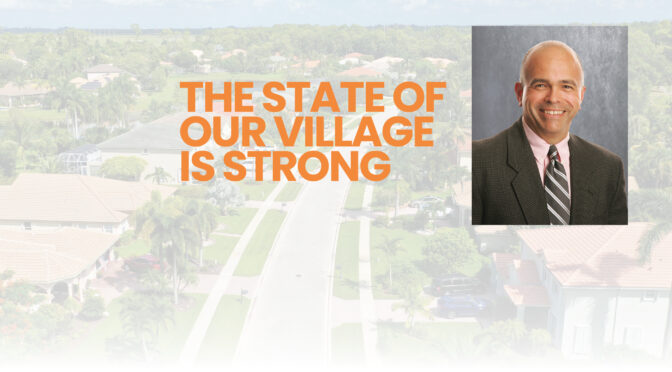
Building Bridges In The Community

Building Bridges In The Community Wellington’s Staff Serves Vital Roles In Connecting Our Great Hometown

By Jim Barnes, Wellington Village Manager

As we begin to wrap up the first quarter of 2023, I am reminded of the many ways we, as public servants, serve as bridges to the community — connecting people with services, places and often with other people. When I was appointed as the village manager for our great hometown, my hope was to continue facilitating these connections throughout our community.

Village Employees 
From our customer service representatives who answer phone calls and handle in-person transactions at each of our village facilities, to the public works and utility employees who maintain parks and buildings, manage our utilities and operate our infrastructure, our more than 300 full-time employees and more than 75 seasonal employees are all-in, all the time, making sure our residents continuously receive the unmatched services and amenities to which they are accustomed.

Technology Connections 
We also leverage technology to provide these connections. In 2021, we launched the GoWellington app. GoWellington is a platform designed for easy communication between Wellington residents and the Village of Wellington. In the first year, we processed more than 2,000 requests through the app. It streamlines the service request process and provides another way for residents to connect with the village and get a timely response.

People To Places
In many ways, the village also helps connect people to places. Our community events attract more than 120,000 people each year. From the Memorial Day and Veterans Day observances to our Independence Day and Fall Fest celebrations, our events have created places where people meet, have fun and form yearly traditions. Our park maintenance team members keep Wellington’s 36-plus parks beautiful, safe and state-of-the-art so that families have places to spend time and unwind. Additionally, the community services team is helping bridge the mobility gap by bringing recreation programming to our neighborhood parks and providing organized activities at these locations through programs like Super Fridays. These initiatives have been successful and will continue through 2023.

Award-Winning Events
The village also serves as a bridge, forming connections among people. Our award-winning events and programs provide an inclusive platform for residents and visitors to enjoy our great hometown. From cultural events throughout the year like our Lunar New Year and Pride Market celebrations at the Lakeside Market at Town Center, to our sensory inclusive activities at our Independence Day celebration and our Juneteenth celebration, Wellington is indeed a community welcome to all.

Programs & Initiatives
Those programs and events are just some of the many initiatives led by a team that promotes and facilitates real social, cultural and civic connections in the community, year after year. Our Palm Beach County Sheriff’s Office District 8 team continues to connect with the community, not only through their daily interactions with residents, but through proactive events, Coffee with a Deputy opportunities and community education classes. Our parks and recreation staff connect with residents through classes, camps and various wellness events for residents and visitors of all ages.

Bridges To The Future
We also serve as bridges to the future. By maintaining smart fiscal policies, investing in innovation and infrastructure, engaging in thoughtful planning and implementing forward-thinking budgets, the Wellington Village Council and village employees are continuously building upon our past successes and proud traditions to ensure that Wellington is sustained, remaining a community of choice — vibrant, innovative, engaged and resilient — for generations to come.

Facebookpinterestmail

Exciting Season Ahead At WEF

Exciting Season Ahead At WEF The Winter Equestrian Festival Features 13 Weeks Of Hunter, Jumper And Equitation  Competitions

The 44th annual Winter Equestrian Festival kicked off its 13 weeks of competition in early January, running through April 2 at the Wellington International showgrounds featuring world-renowned hunter, jumper and equitation competitions.

Twelve of the 13 weeks feature FEI-sanctioned competition, welcoming some of the most talented and highest-ranking show jumpers from around the world. Spectators are welcome at Wellington International from Wednesday through Sunday each week.

“The most exciting thing this year is that the riders have started to qualify for the 2024 Olympic Games,” said Michael Stone, president of Wellington International. “The qualification period has just started. That means that all the top riders have come here to get their qualifications done early.”

Highlighting the season is the return of Saturday Night Lights, featuring international Grand Prix and hunter derby competitions under the lights in the iconic International Arena.

Spectators can enjoy a variety of food and beverage options, live music, shopping, as well as family-friendly activities, such as face-painting, carousel rides, a petting zoo, magicians and stilt walkers.

Hospitality packages are also available for interested guests who want to experience the night’s competition from the best seats in the house.

“This is the only place where you can get free family entertainment and watch top athletes in the world,” Stone said. “This year, we have Olympic champions, world champions, European and Pan-American champions competing every Saturday night.”

The four CSI5* Grand Prix classes, the highest level of international show jumping in the sport, will take place on Feb. 11 (WEF 5), Feb. 25 (WEF 7), March 11 (WEF 9) and April 1 (WEF 12). These competitions feature the top horse-and-rider combinations in the world and include four FEI World Ranking classes.

The final CSI5* competition of the circuit (WEF 12) will welcome the $500,000 Rolex Grand Prix CSI5*, the most prestigious international class of the 2023 season.

The $500,000 Rolex Grand Prix CSI5* will once again take place on the final Saturday of the season on the derby field at Equestrian Village.

As part of the Saturday Night Lights series, Wellington International will proudly host the Great Charity Challenge, sponsored by Fidelity Investments, on Saturday, Feb. 4. This exciting event, in its 14th year, blends philanthropy with equestrian sport by awarding more than $1 million to more than 40 charities in Palm Beach County.

On Saturday nights, gates open at 6 p.m., and general admission is free. There is a $20 per car fee for parking.

The Wellington International team will also be expanding its special event offerings with brunch on select Sundays to offer fans and competitors another opportunity to enjoy the sport this season.

“We have started this special brunch offering, so people can come by early on a Sunday afternoon to watch the jumping,” Stone said. “Then they can go on to polo after that and have a really great Sunday of equestrian sports.”

Brunch will be offered in the Blue Ribbon Club, and attendees will start their Sundays with a prime view of the International Arena and a complimentary glass of champagne. The Blue Ribbon Club Brunch debuted on Jan. 29 during WEF 3 and will continue on Feb. 12 (WEF 5), Feb. 26 (WEF 7), March 5 (WEF 8), March 12 (WEF 9), March 19 (WEF 10) and March 26 (WEF 11).

Now owned by the Global Equestrian Group, the former Palm Beach International Equestrian Center was rebranded Wellington International during the final weeks of the 2022 season. Over the past year, the new owners have put nearly $9 million into upgrades at the showgrounds.

“We have done a lot of investing here, such as new stables,” Stone said. “We have built three new permanent barns. This has been really well received by the competitors. This is part of our long-term plan to continue to enhance the facility to ensure that we remain the No. 1 horse show in the world.”

This has included a focus on horses, riders and spectators.

“We continue to improve the footing in the rings, so that the horses have the best conditions to compete in,” Stone said. “We have also created more viewing areas for the public, so that everyone who comes has a place to watch, especially during the Saturday Night Lights events.”

Wellington International is located at 3400 Equestrian Club Drive, off Pierson Road. Visit www.wellingtoninternational.com to learn more.


Facebookpinterestmail

Faces of WEF 2023

Faces of WEF 2023

The 2023 edition of Wellington’s signature horse show series, the Winter Equestrian Festival, is underway at the newly rebranded Wellington International showgrounds. Since being acquired by Global Equestrian Group last year, there have been nearly $9 million in improvements to the facility, home to the richest and longest-running horse show series in the world. Horse and rider pairs will soar over fences, navigate complicated sequences and make hairpin turns — all to the delight of the crowds. Riders known around the world will join up-and-comers, youngsters and adult amateurs in the ring at WEF, which offers classes for every age and skill level. Over the next few pages, you’ll get a glimpse at just a handful of the riders competing this season at WEF, from current superstars to future stars, in our annual Faces of WEF feature section

BEN MAHER
Olympic gold medalist Ben Maher rides for Great Britain and has competed in four Olympic Games. He is currently ranked sixth in the Longines Rankings and 34th in the FEI Jumping World Cup Standings. With more than 145 wins under his belt, Maher is one talented rider to watch at the Winter Equestrian Festival this year.

JOHN FRENCH
Originally from Baltimore and now living in Wellington, John French is one of the top hunter riders to watch at WEF this year. French most recently won the $10,000 USHJA National Hunter Derby at Wellington International during the ESP Holiday Series aboard Wyatt. A seasoned and decorated horseman, French is fantastic to watch in the show ring, where he brings decades of experience.

CONOR SWAIL
Conor Swail, a native of County Down, Ireland, is a frequent rider on the WEF circuit each winter. He is currently ranked No. 5 on the Longines Rankings and No. 2 in the FEI World Cup Standings. A crowd favorite, Swail will no doubt make many jump-offs exciting at this year’s Winter Equestrian Festival.

LUKE JENSEN
Coming from a family of equestrians, Luke Jensen is one of the most talented young riders to watch this year at the Winter Equestrian Festival. Last year, Jensen was the winner of the 2022 WEF Equitation Championship on Stephex Stable’s Jamaica. Originally from Denton, Texas, he is a bright, rising star.

McLAIN WARD
One of the most decorated American riders, New York native McLain Ward is a perennial fan favorite. A five-time Olympian and two-time Olympic gold medalist, Ward started WEF 2023 on a high note when he won the $75,000 Prestige Italia Grand Prix during Premiere Week at Wellington International aboard Catoki, owned by Marilla van Beuren and Bob Russell.

NATALIE DEAN
Natalie Dean is one of today’s most talented young riders. A California native, Dean is currently ranked No. 5 in the Longines Jumping FEI World Cup Standings and No. 7 in the FEI Jumping Under 25 rankings. She was chosen by the United States Equestrian Federation to represent the U.S. at the $150,000 Nations Cup CSIO4* last season at WEF.

SCOTT STEWART
One of America’s leading hunter riders, Scott Stewart has been a staple in Wellington International’s hunter rings for decades. Stewart, who grew up in Connecticut, has won all of the nation’s top hunter awards, including the $100,000 WCHR Peter Wetherill Palm Beach Hunter Spectacular in Wellington. Stewart was victorious during WEF’s Premiere Week in the Equine Tack and Nutritionals 3’9” Green Hunter Division aboard Jordan.

VICTORIA COLVIN
Victoria “Tori” Colvin is one of the nation’s most successful young riders. She has been consistently in the ribbons for both hunters and jumpers since she began showing ponies as a child. Her accolades include being named the National Show Hunter Hall of Fame Rider of the Year in 2020. In 2022, she was the Winter Equestrian Festival’s Overall Hunter Rider Circuit Champion.

ZAYNA RIZVI
Wellington native Zayna Rizvi is a talented junior rider who won the coveted 2021 ASPCA Maclay National Championship. Her aptitude in equitation, hunters and jumpers knows no bounds. She competed at the 2022 FEI Jumping Nations Cup Youth Final. Last summer, Rizvi won the $37,000 North Face Farm Welcome Stake CSI 2* at the Great Lakes Equestrian Festival aboard her mount Excellent, owned by Peacock Ridge.

ZOÉ CONTER
Conter, a top Under 25 rider, is no stranger to success. From an equestrian family, she is the daughter of Stephan Conter of Stephex Stables. Last year, during the second week of WEF, Conter won the Martha W. Jolicoeur Leading Lady Rider Award. She also placed sixth in the $500,000 Rolex Grand Prix CSI5* during Week 12. She enters 2023 with an eye toward more impressive victories.

Facebookpinterestmail